
Cameron County Divorce Records
Cameron County divorce records are filed and kept at the District Clerk's office in Brownsville. If you need to search for a divorce case, look up a decree, or get a certified copy, the District Clerk is your first stop. You can reach the office in person or by mail. Cameron County covers the southern tip of Texas along the Rio Grande and includes Brownsville, the county seat. The District Clerk holds all divorce filings, decrees, and case documents going back many decades. Most of these records are open to the public under Texas law.
Cameron County Overview
Cameron County District Clerk
The District Clerk's office in Brownsville holds all divorce records for Cameron County. This is the office you contact when you need a copy of a divorce decree, want to search old cases, or need to file new divorce paperwork. The clerk is the official records keeper for all district court proceedings, which includes family law and divorce cases.
Cameron County has several district courts that handle family law matters. Cases filed anywhere in the county go through the District Clerk's central office. The courthouse is located in the Dancy Building in Brownsville. The office is open Monday through Friday during regular business hours.
| Office | Cameron County District Clerk |
|---|---|
| Address |
1100 E. Monroe St., Dancy Building Brownsville, TX 78520 |
| Phone | 1-866-544-0830 |
| Hours | Monday through Friday, 8:00 AM to 5:00 PM |
| Website | cameroncountytx.gov |
The Cameron County website provides general information about county offices and services. For specific questions about how to request divorce records or what a search will cost, call the clerk's office directly before making a trip. Staff can tell you what forms to bring and what fees to expect.
Lead-in: The Cameron County official website provides access to department contacts and public resources.
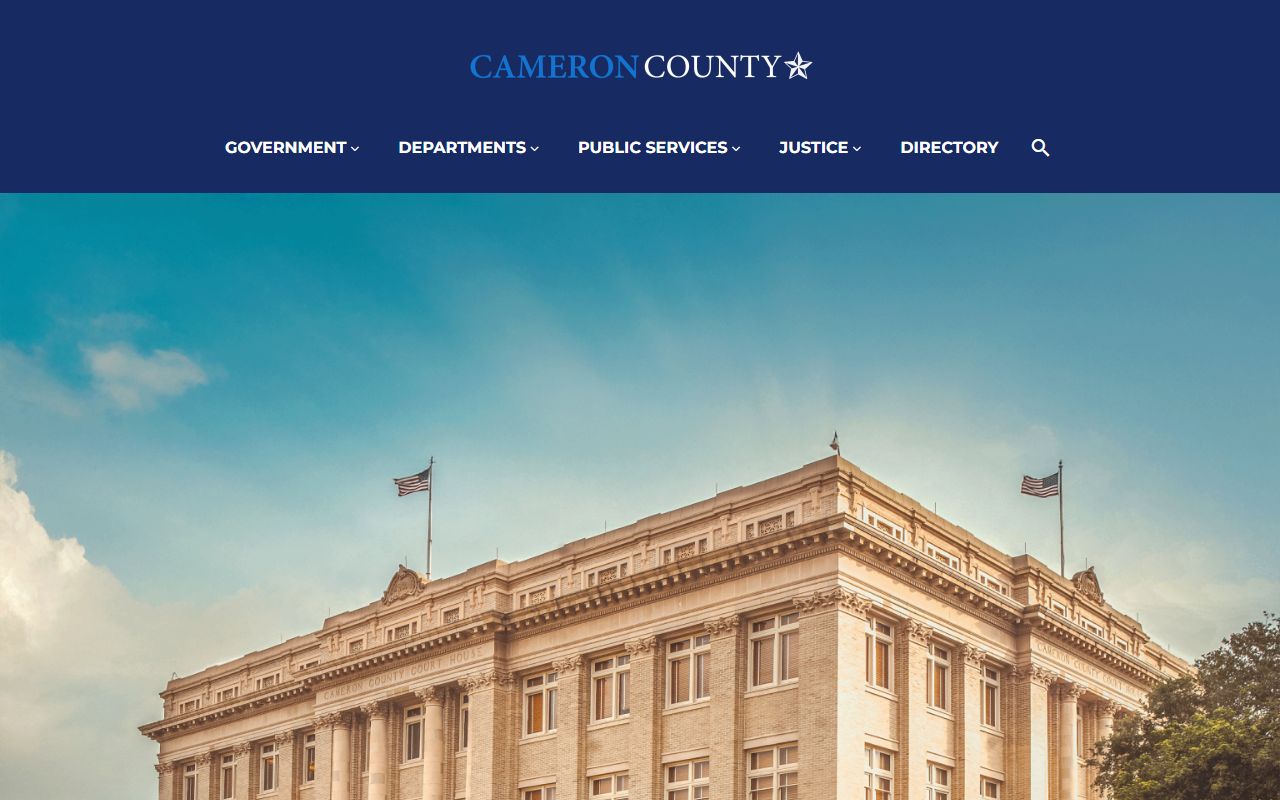
The county site can direct you to the right office when you need Cameron County divorce records.
How to Find Cameron County Divorce Records
You have a few ways to search divorce records in Cameron County. In person is often the fastest if you need certified copies. The clerk's office staff can search by name or cause number. Mail requests work if you already have case details and don't need documents the same day.
The statewide re:SearchTX portal is a free online tool that covers Cameron County. You can look up cases by party name or cause number. The system shows docket entries, hearing dates, and case status. It doesn't always show every document in the file, but it gives you a solid starting point. From there you can go to the courthouse for full copies.
You can also file and manage cases through the Texas electronic filing portal at efile.txcourts.gov. Attorneys are required to use this system. Self-represented litigants can use it too. If you already know your cause number, you may be able to pull basic case info through this system as well.
For cases going back before the digital era, the District Clerk keeps paper files and microfilm records. Older records may need more lead time to retrieve. Call the office ahead of time if you're looking for a divorce that was filed more than 20 or 30 years ago. Staff will let you know if there are any delays for pulling older files.
Note: The District Clerk cannot give you legal advice about your case. They can tell you what records exist and how to get copies, but questions about the law should go to an attorney.
Filing for Divorce in Cameron County
To file for divorce in Cameron County, at least one spouse must meet the Texas residency rule. Under Texas Family Code § 6.301, one spouse must have lived in Texas for six months and in Cameron County for at least 90 days before filing. If you don't meet that threshold yet, you'll need to wait until you do.
The process starts with filing an Original Petition for Divorce at the District Clerk's office. The other spouse must be served with notice or sign a waiver. Texas allows no-fault divorce under Texas Family Code § 6.001, which means the petition can simply say the marriage has become insupportable. You don't have to prove fault. But fault grounds like cruelty or adultery can still be used if relevant, and they may affect how property is divided.
After the petition is filed, Texas law requires a 60-day waiting period under Texas Family Code § 6.702. This applies in most cases. Once that time passes and all issues are resolved, the judge signs the Final Decree of Divorce. That decree is the official record that ends the marriage and spells out all terms. The District Clerk files the original and can provide certified copies upon request.
Property in Texas divorces is divided under community property law. Under Texas Family Code Chapter 7, the court divides marital property in a just and right manner. Assets you owned before marriage or received as gifts are usually treated as separate property.
60-Day Wait: Texas requires at least 60 days from the filing date before a court can grant a divorce. Exceptions exist in domestic violence cases under Family Code § 6.702.
What Cameron County Divorce Records Show
Divorce records in Cameron County contain several types of documents. The petition that starts the case is the first. Then come service documents, any responses from the other spouse, motions, hearing notices, and finally the Final Decree of Divorce. All of this becomes part of the official case file held by the District Clerk.
The Final Decree is the key document most people need. It lays out every term of the divorce: who gets what property, any debt assignments, child custody and possession schedules, child support amounts, and spousal maintenance if ordered. If you need proof you're divorced for a name change, remarriage, loan, or government benefit, a certified copy of the decree is what you'll need. The state also keeps a basic index of divorces reported since 1968 through Texas DSHS Vital Statistics, but that index doesn't include the decree itself.
Most divorce case files in Cameron County are public record. Parties to the case, attorneys, and members of the public can all request copies. Some information may be redacted in cases involving minors or domestic violence. Financial documents attached to the case may also be restricted under court order.
Legal Resources in Cameron County
If you need help with a divorce case in Cameron County, several organizations can assist. Lone Star Legal Aid serves South Texas and offers free or low-cost legal help for family law matters, including divorce, for people who qualify based on income. You can reach them online or by phone to find out if you're eligible.
The State Bar of Texas runs a lawyer referral service at texasbar.com. You can search for attorneys who handle family law in Cameron County. Many offer a reduced-fee initial consultation. TexasLawHelp at texaslawhelp.org has self-help guides, court form instructions, and plain-language explanations of Texas divorce law. Official court forms are at txcourts.gov.
The Texas Office of Court Administration also provides standardized divorce forms designed for people who don't have attorneys. These cover uncontested divorces with and without children. Even with these tools, complex cases involving significant property or custody disputes are usually better handled with an attorney.
Note: The District Clerk's office staff cannot advise you on legal strategy or tell you what to file. For legal questions, use one of the resources above.
Cities in Cameron County
Cameron County includes several cities along the Rio Grande Valley. Divorce cases from all parts of the county are filed with the same District Clerk in Brownsville.
Other communities in Cameron County include Harlingen, San Benito, Port Isabel, Los Fresnos, La Feria, and Laguna Vista. Divorce records for residents of all these areas go through the Cameron County District Clerk's office in Brownsville.
Nearby Counties
These counties border Cameron County. If you're not sure which county handles your case, check the address where you or your spouse lives.