
Colorado County Divorce Records
Colorado County divorce records are maintained by the District Clerk in Columbus, Texas. The District Clerk's office stores all divorce case files, including the original petitions, agreed decrees, and Final Decrees of Divorce for cases filed in Colorado County. You can access records in person at the courthouse in Columbus, submit a written mail request, or use the statewide re:SearchTX portal for case lookups. The county's official website has a dedicated District Clerk page with contact details and information about the office's procedures.
Colorado County Overview
Colorado County District Clerk
The District Clerk in Columbus serves as the official keeper of all court records in Colorado County. This includes every divorce case filed in the county's District Court. The clerk's office processes incoming petitions, manages case files, and handles requests for copies and certified documents. Staff can locate cases by name or cause number.
Colorado County is between Houston and San Antonio along the I-10 corridor. The county seat of Columbus has the main courthouse where all divorce filings are processed. If you or your spouse lives in Colorado County, you file your divorce here. The clerk's office has records going back many years, though older files may require more time to retrieve.
The county provides a dedicated District Clerk page at co.colorado.tx.us. You can also access the main county website at co.colorado.tx.us for general contact information and office hours.
| Office | Colorado County District Clerk |
|---|---|
| Address |
Colorado County Courthouse 400 Spring Street Columbus, TX 78934 |
| Hours | Monday - Friday, 8:00 AM to 5:00 PM |
| District Clerk Page | co.colorado.tx.us |
| County Website | co.colorado.tx.us |
The Colorado County District Clerk page provides direct access to office contact information and details about record requests.
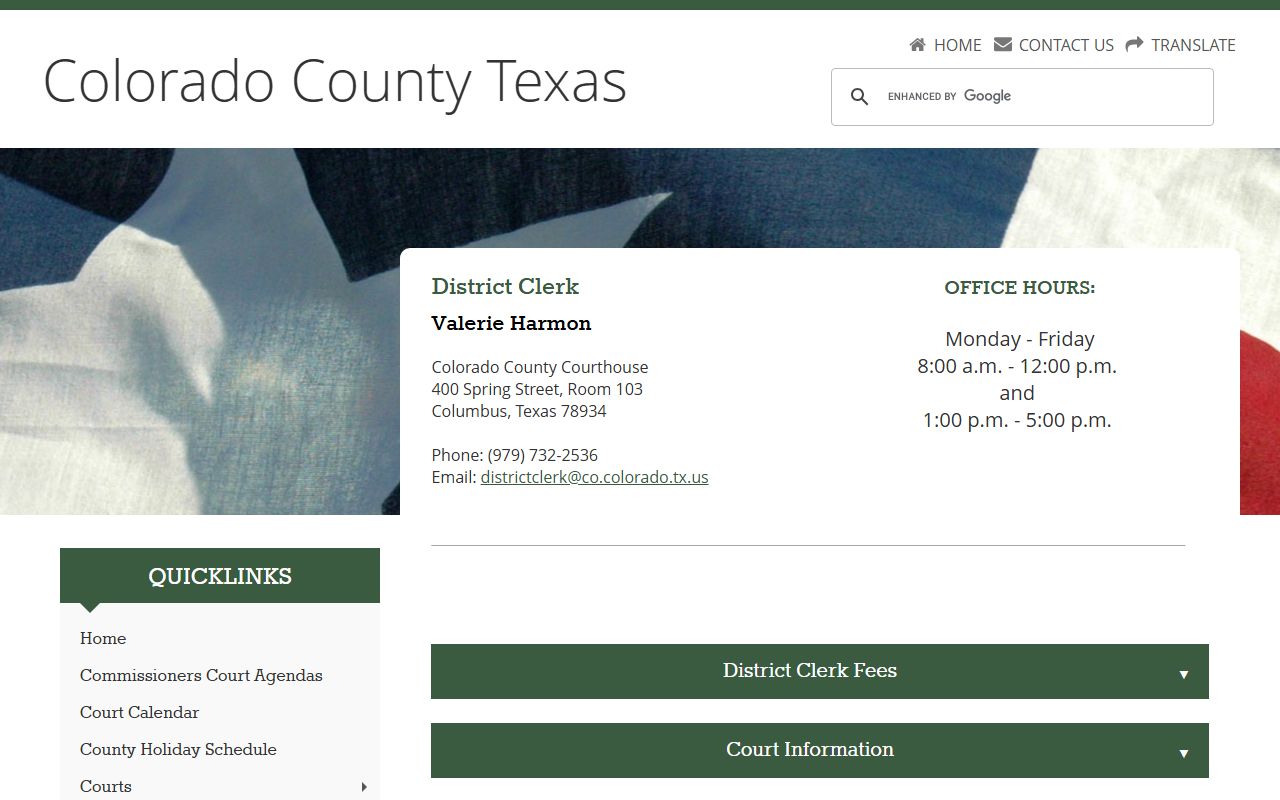
The Colorado County District Clerk's official page at the county website covers procedures for requesting court records including divorce case files.
The county also maintains general information about its services at the main website.
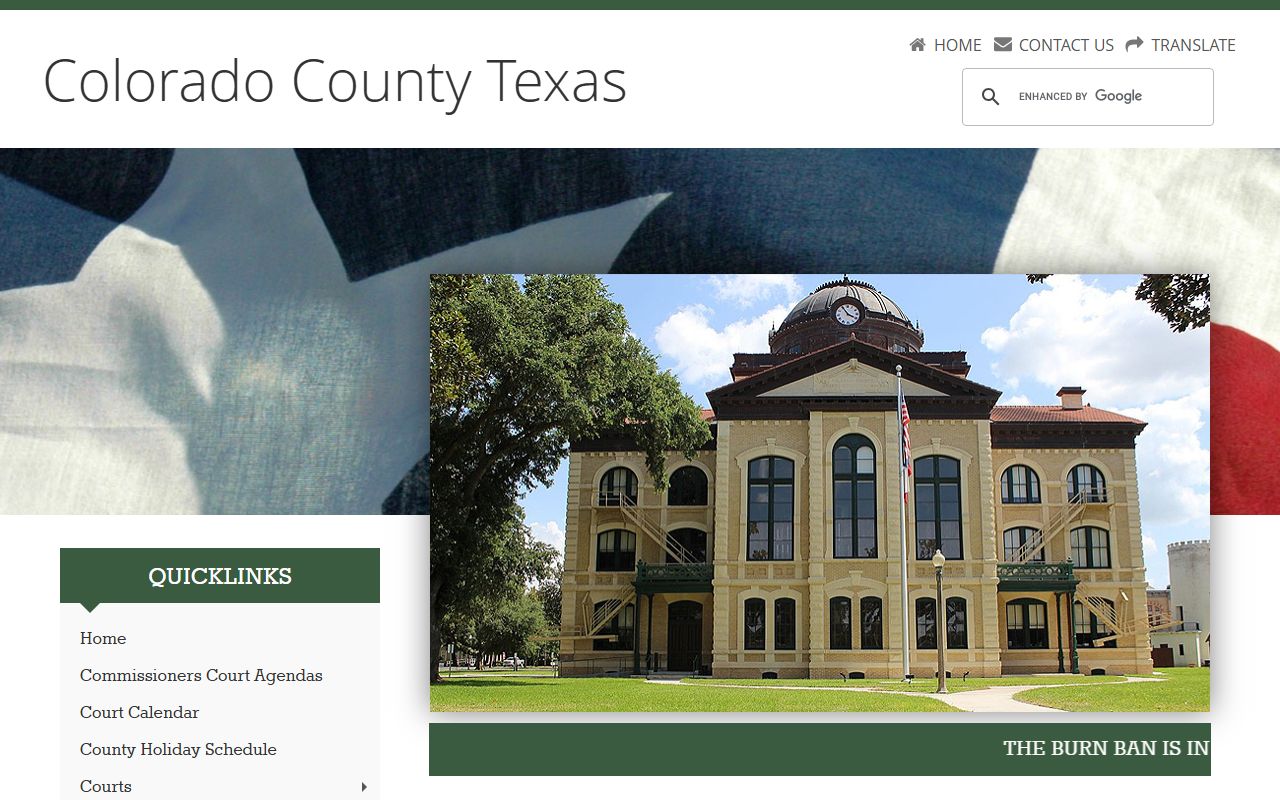
The Colorado County homepage provides links to county offices including the District Clerk who handles all divorce records in Columbus.
How to Search Colorado County Divorce Records
You can search for Colorado County divorce records in a few ways. The statewide re:SearchTX portal lets you look up cases by party name or cause number from anywhere with internet access. This is a good first step. It shows case status and basic docket information without requiring a visit to the courthouse.
For the full case file or certified copies, you contact the District Clerk in Columbus directly. In-person visits work well. Go to the courthouse at 400 Spring Street during business hours and ask at the clerk's counter. Bring your ID. Staff can run a name search if you do not have the cause number, though having it makes things faster.
Mail requests are also accepted. Send a written request to the District Clerk's office with the parties' names, the approximate year of the divorce, and any case number you have. Include a check or money order for the copy fees. Call ahead to confirm the current fee schedule before sending payment, as fees can change.
The Texas DSHS Vital Statistics Section maintains a statewide index of divorces from 1968 forward. A verification letter from DSHS confirms the names, date, and county of a reported divorce but does not include the decree itself.
Divorce Filing Process in Colorado County
Divorces in Colorado County follow the procedures in Texas Family Code Chapter 6. You file the Original Petition for Divorce with the District Clerk in Columbus and pay the filing fee. The clerk assigns a cause number and the case begins. From that point, the process depends on whether the divorce is agreed or contested.
Residency requirements under Family Code § 6.301 apply here. One spouse needs six months in Texas and 90 days in Colorado County to file. If you just moved to the county, you may need to wait before the 90-day mark to file here.
The most common ground for divorce in Texas is insupportability under Family Code § 6.001. This no-fault ground means the marriage has broken down due to conflict or discord and cannot reasonably be saved. No proof of fault is needed. Fault-based grounds like adultery, cruelty, and abandonment are also options under Chapter 6 of the Family Code.
After filing, the case cannot be finalized until a 60-day waiting period passes. This is required by Family Code § 6.702 and applies in every Texas county. The judge signs the Final Decree after the waiting period and after all issues are resolved. Cases with family violence may be exempt from the wait.
Texas community property rules under Family Code Chapter 7 govern how property is split. The court divides marital property in a just and right manner. Each spouse keeps separate property they owned before the marriage or acquired by gift or inheritance during the marriage. Child-related matters are governed by Chapter 153 on conservatorship and support.
Free forms and guides for divorce cases are available at txcourts.gov and TexasLawHelp.org.
What Colorado County Divorce Records Contain
A Colorado County divorce file includes every document filed during the case. The Original Petition for Divorce is the starting document. It lists both parties, states the grounds, and describes what is being requested. The file grows from there, adding service of process records, any temporary orders, financial information, and the final agreement or judgment.
The Final Decree of Divorce is the most significant document. It is signed by the judge and legally ends the marriage. It contains the terms of property division, any spousal maintenance, and if children are part of the case, all conservatorship and child support details. A certified copy of this decree is what you need for name changes, Social Security matters, benefit applications, and remarriage.
Colorado County divorce records are public record in most cases. You do not have to be one of the parties to request copies. Fees apply for both plain and certified copies. Some materials may be restricted, such as financial exhibits submitted under seal or records related to minor children where privacy protections apply. Ask the clerk about specific documents in a given case before submitting a formal request.
Note: The Colorado County District Clerk's office has noted in its expunction-related documents that it takes no responsibility for incomplete agency contact lists. For divorce records, always verify directly with the clerk that the file you need is available and complete before relying on it for legal purposes.
Legal Help for Colorado County Divorce
Colorado County residents seeking help with divorce cases can find resources both locally and through state-level programs. The State Bar of Texas referral service at texasbar.com lets you search for family law attorneys by location. Attorneys practicing in the Houston area sometimes take cases from Colorado County due to its proximity to the metro area.
Lone Star Legal Aid covers the region around Colorado County and provides free legal services to low-income residents. Call their main line to check eligibility and current service areas. TexasLawHelp.org is a strong free resource for anyone handling a divorce case on their own. It has guides, forms, and videos covering every step in the Texas divorce process. All official forms are also available at txcourts.gov.
Cities in Colorado County
Colorado County is in Southeast Texas along I-10. Columbus is the county seat and the location of the District Court. All divorce cases in the county are filed and processed in Columbus.
Other communities in Colorado County include Eagle Lake, Weimar, and Garwood. None of these communities meet the population threshold for a dedicated city page. All divorce records for the county are held at the courthouse in Columbus.
Nearby Counties
Colorado County is situated between Houston and San Antonio. These nearby counties also have District Clerk offices that handle divorce records for their respective jurisdictions.