
Deaf Smith County Divorce Records
Deaf Smith County divorce records are held by the District Clerk in Hereford, the county seat. All divorce cases filed in this county go through the district court, and the clerk keeps every document in the case file. Hereford is in the Texas Panhandle, and the county serves a mostly agricultural community. If you need to look up a divorce case or get a certified copy of a final decree, the District Clerk's office at the Deaf Smith County Courthouse is where you start. Staff can search by name or cause number and help you request copies.
Deaf Smith County Overview
Deaf Smith County District Clerk
The District Clerk in Hereford is responsible for all court records in Deaf Smith County, including divorce case files. The office processes new filings, maintains case documents, and provides copies when requested. Staff can search by name or cause number and pull files for in-person review or copy requests.
The county website at co.deaf-smith.tx.us has a clear navigation structure. The District Court section includes the District Clerk. You can reach the clerk page directly at co.deaf-smith.tx.us/page/deaf-smith.District.Clerk. The site also links to the Deaf Smith County Library, Texas Veterans Portal, Texas A&M AgriLife Extension, and Girl Scouts Texas Oklahoma Plains, showing the county maintains community resource links alongside government services.
The county posts calendars of events, employment opportunities, and financial transparency documents. Tax rate information and budgets go back several years on the site. The courthouse photo is featured on the homepage, and staff contact information is available through the District Court menu.
| Office | Deaf Smith County District Clerk |
|---|---|
| Address |
Deaf Smith County Courthouse Hereford, TX 79045 |
| Judicial District | 222nd Judicial District |
| Hours | Monday through Friday, 8:00 AM to 5:00 PM |
| Website | co.deaf-smith.tx.us |
How to Find Deaf Smith County Divorce Records
Call or visit the Deaf Smith County District Clerk in Hereford to search for a divorce case. Have the names of both spouses if possible, plus the approximate year of filing. A cause number speeds the search considerably. For recent cases, the clerk may be able to find results quickly. Older files may need to be pulled from physical storage, so calling ahead is a good idea.
The statewide re:SearchTX portal is worth checking for recent cases. It pulls records from courts across Texas. Coverage for smaller Panhandle counties can be incomplete. If you do not find results there, go directly to the District Clerk's office in Hereford.
The Deaf Smith County website provides navigation to the District Court and District Clerk sections.
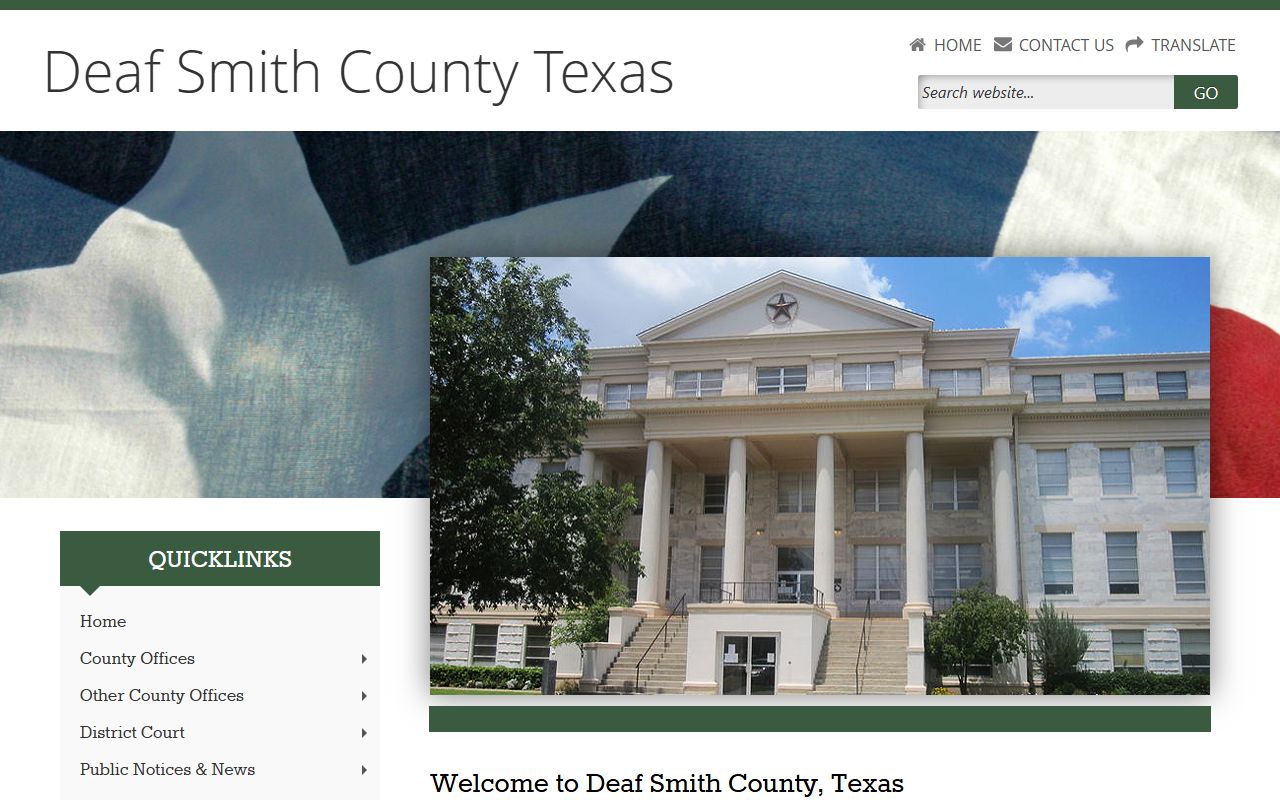
The county homepage at co.deaf-smith.tx.us features the courthouse and links to the District Court section where the clerk manages divorce filings and records requests.
For a basic confirmation that a divorce was granted in Texas, the DSHS Vital Statistics Section index is at dshs.texas.gov/vital-statistics/marriage-divorce-verification. It covers 1968 forward and shows names, date, and county. For the full decree, contact the Deaf Smith County District Clerk.
Filing for Divorce in Deaf Smith County
The residency rule under Texas Family Code Section 6.301 requires one spouse to have lived in Texas for six months and in Deaf Smith County for at least 90 days before filing. If you just moved to Hereford or the county, wait until the 90-day mark before filing, or file in the county where you previously lived long enough.
Most Texas divorces use the insupportability ground under Texas Family Code Section 6.001. This no-fault ground simply means the marriage has broken down due to conflict or personality differences with no hope of fixing things. Neither spouse has to prove the other did anything wrong. Fault-based grounds are also available under Texas law: cruelty under Section 6.002, adultery under Section 6.003, felony conviction under Section 6.004, and abandonment under Section 6.005.
After the petition is filed, the other spouse must be served. A mandatory 60-day waiting period then runs under Texas Family Code Section 6.702. The judge cannot sign the decree until those days have passed. For uncontested cases where both sides agree on all terms, the divorce can be finalized fairly quickly once the 60 days are done. If there are disputes over property, custody, or support, a contested case may take months or longer.
Property division in a Deaf Smith County divorce follows community property rules under Texas Family Code Chapter 7. The court divides marital property in a way that is just and right. Separate property you owned before the marriage or received by gift or inheritance stays yours as long as it was kept apart from shared funds. Farm and ranch property is commonly an issue in Panhandle divorces, and documenting separate property is especially important in those cases.
Note: If cost is a barrier to filing, Texas Rule of Civil Procedure 145 allows a fee waiver for people who cannot afford court costs. The Statement of Inability to Afford Payment form is available from the District Clerk or at txcourts.gov.
What Deaf Smith County Divorce Records Contain
A divorce case file in Deaf Smith County includes everything filed with the court. The Original Petition for Divorce opens the case. From there, the file includes service records, any response from the other spouse, agreed orders or mediated settlement agreements, financial affidavits, parenting plans, and the Final Decree of Divorce. Each case is different, but the decree is the key document that finalizes everything.
The Final Decree of Divorce states every order the court made. That includes how property and debts are divided, whether spousal maintenance was ordered, and all terms related to children: conservatorship type, possession schedule, child support amount, and any other orders the judge signed. If a name change was requested and granted, it is in the decree too. Certified copies are needed for legal name changes on government IDs and documents.
Most items in a divorce file are public. Financial exhibits like tax returns may be sealed. Info about minor children may have restricted access in some cases. You do not need to be a party to the case to request plain copies. Certified copies have a higher fee. The District Clerk can tell you current fees and what documents are available before you visit or send a request.
Legal Resources for Deaf Smith County
The State Bar of Texas referral service at (800) 252-9690 and at texasbar.com can help you find a family law attorney who serves the Panhandle area. Attorneys from Amarillo and Lubbock often handle cases in smaller surrounding counties. Many offer flat fees for straightforward uncontested divorces.
For free resources, TexasLawHelp at texaslawhelp.org has guides and court forms for divorce cases in Texas, available in English and Spanish. Official Supreme Court approved divorce forms are also at txcourts.gov/rules-forms. Lone Star Legal Aid serves the Panhandle region and may be able to help with family law cases for income-qualifying residents. The Deaf Smith County website also links to the Texas Veterans Portal, which may have resources for veterans dealing with divorce and family legal matters.
Note: The Deaf Smith County website links to the Texas Veterans Portal, which provides legal resources and referrals specifically for veterans and their families navigating divorce and family law matters in Texas.
Cities in Deaf Smith County
Hereford is the county seat and the main city in Deaf Smith County. All divorce filings and record requests go through the District Clerk's office at the Deaf Smith County Courthouse in Hereford.
Umbarger is a small community also in Deaf Smith County. It does not have its own court. All district court matters for the county, including divorce cases, are handled in Hereford.
Nearby Counties
Deaf Smith County is in the Texas Panhandle, south of Amarillo. These counties border or are close to Deaf Smith County.