
Ector County Divorce Records
Ector County divorce records are maintained by the District Clerk at the Ector County Courthouse in Odessa, Texas. If you need to search for a divorce case or obtain a certified copy of a Final Decree, the District Clerk's office is your starting point. Ector County serves the Odessa area in West Texas, part of the Permian Basin. The District Clerk handles all civil district court filings including divorce, and their office at 300 N. Grant Avenue keeps every divorce case filed in Ector County.
Ector County Overview
Ector County District Clerk
The Ector County District Clerk's office is located in Room 204 of the Ector County Courthouse at 300 N. Grant Avenue in Odessa. The office manages all civil district court records for the county, including divorce filings, temporary orders, and Final Decrees of Divorce. Staff can help you search for a case by name or cause number and make copies for you.
Ector County serves the Odessa area in the Permian Basin. The county has seen significant population growth tied to the energy industry. The District Clerk processes divorce cases from the multiple district courts that serve Ector County. For online case research, the Ector County public portal and the statewide re:SearchTX system are both options to start your search. The county website at co.ector.tx.us has department listings and general county information.
| Office | Ector County District Clerk |
|---|---|
| Address |
Ector County Courthouse 300 N. Grant Avenue, Room 204 Odessa, TX 79761 |
| Hours | Monday through Friday, 8:00 AM to 5:00 PM |
| Website | co.ector.tx.us |
Lead-in: The Ector County official website provides department contacts and general county services for Odessa and surrounding communities.
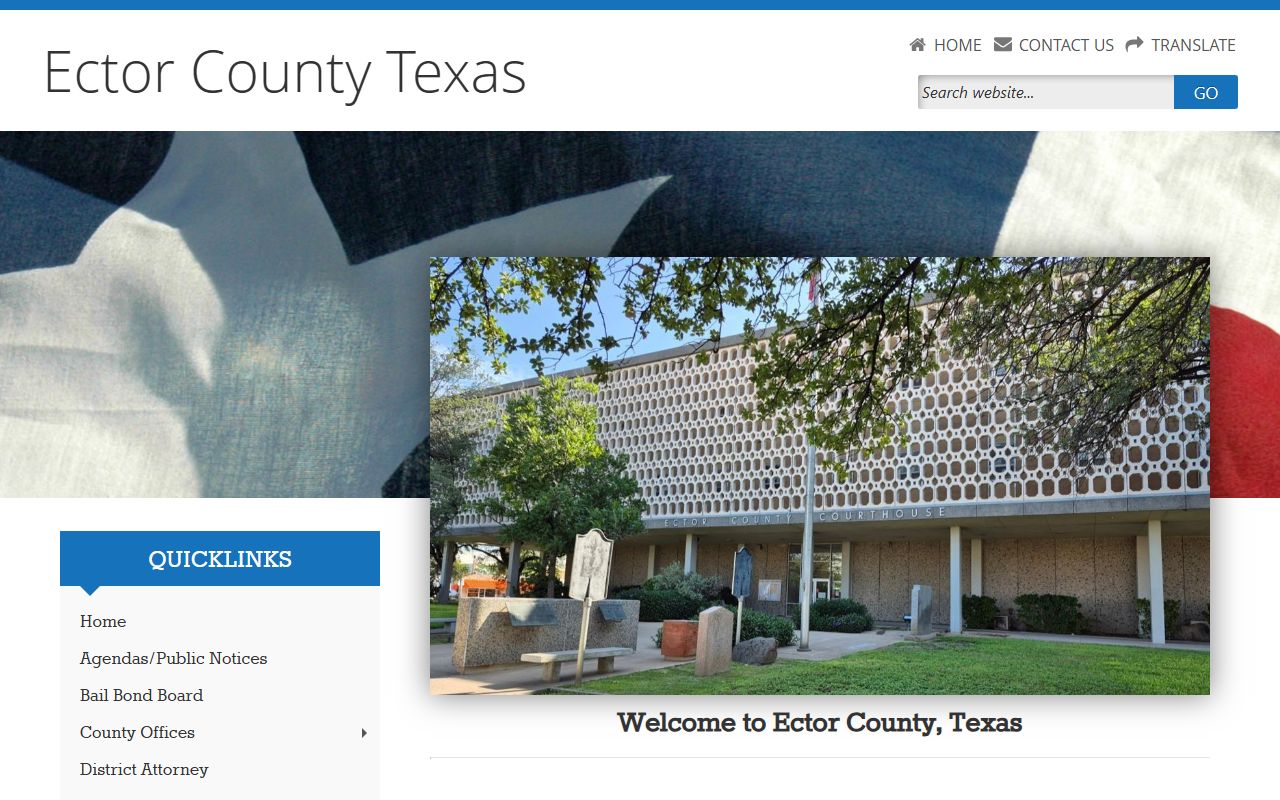
The county website is useful for confirming department contacts and current hours before visiting the courthouse in Odessa.
How to Find Ector County Divorce Records
Divorce records in Ector County can be searched online through the statewide re:SearchTX portal. Search by party name or cause number to find a case. The system shows docket entries, filing dates, and basic case status. The Ector County public portal may also have local case search options. For certified copies or full case access, contact the District Clerk's office directly.
In-person records requests are handled at the District Clerk's office in Room 204 of the courthouse in Odessa. Bring the full names of both spouses and the case number if you have it. Staff can search and pull the file. Bring a valid photo ID. Plain copies and certified copies are available at different rates, so know what you need before you go. For mail-in requests, write to the District Clerk at 300 N. Grant Avenue, Room 204, Odessa, TX 79761.
If you need to confirm a divorce is in the state records system, the Texas DSHS Vital Statistics Section can issue a verification letter for divorces recorded in Texas since 1968. That letter shows names, county, and date. It does not replace the certified decree but can help confirm where the divorce was filed before you contact the right county.
Note: The Ector County Clerk's office in Room 111 at the same courthouse handles birth and death certificates for Odessa. Divorce records, however, go through the District Clerk at Room 204, not the County Clerk.
Divorce Filing Process in Ector County
To file for divorce in Ector County, one spouse must have lived in Texas for six months and in Ector County for at least 90 days. That residency rule is set by Texas Family Code Section 6.301. You file the Original Petition for Divorce with the District Clerk at the Ector County Courthouse in Odessa.
Texas allows divorce without proving fault. The no-fault ground is called insupportability under Family Code Section 6.001. It means the marriage has broken down with no real hope of fixing it. Most people in Ector County file on this ground. Fault grounds like cruelty, adultery, abandonment, and felony conviction are also available if they apply to the situation.
Once the petition is filed, the other party must be served or sign a Waiver of Service. Texas then requires a 60-day waiting period before the divorce can be granted, per Section 6.702. That waiting period applies even if both sides agree on everything from day one. An exception allows courts to waive it when there is a history of family violence. After the wait, an agreed case can be finalized at a quick hearing. Contested cases may go to mediation or trial.
60-Day Wait: Texas requires a mandatory 60-day waiting period after the petition is filed before any divorce can be granted, under Texas Family Code Section 6.702. Plan your timeline accordingly.
Texas is a community property state. Under Family Code Chapter 7, the court divides marital property in a just and right way. Property a spouse owned before the marriage, or received as a gift or inheritance kept separate, is not considered community property. All property decisions are spelled out in the Final Decree and become part of the permanent court record.
What Ector County Divorce Records Contain
The divorce case file at the Ector County District Clerk's office holds everything filed from the opening petition through the Final Decree. You will find the Original Petition for Divorce, temporary orders, financial documents, any agreements reached between the parties, and the Final Decree of Divorce itself. The decree is the most important document. It sets out the complete terms the court ordered and is what people need for most legal purposes after the divorce is done.
A typical Ector County divorce record contains both spouses' names and addresses, the date and location of the marriage, the grounds cited for divorce, property and debt division terms, child conservatorship and possession orders if children were involved, child support amounts, and spousal maintenance if ordered. Most divorce records are public. Sealed items or records involving children under special court orders may have restricted access. The District Clerk can clarify what is open and what is restricted for a specific case.
Certified copies carry the court's seal. They are needed for legal name changes, proving your marital status, updating Social Security records, and many financial or legal transactions. The Texas DSHS Vital Statistics holds a basic index of divorces since 1968, but that index is not a replacement for the certified decree when you need the actual terms of the court order.
Legal Help in Ector County
Legal aid services in the Odessa and Permian Basin area include Legal Aid of Northwest Texas, which serves West Texas residents who meet income requirements. Family law is one of their practice areas. Contact them to ask about eligibility for free legal help with your divorce case.
For a private attorney, use the State Bar of Texas directory at texasbar.com to find licensed family law attorneys in Odessa and Midland. Many offer a reduced-cost first meeting. Texas Law Help has free self-help guides and divorce forms for people who want to handle their own case. Official forms are available at txcourts.gov. If you cannot pay court costs, you may file a Statement of Inability to Afford Payment of Court Costs under Texas Rule of Civil Procedure 145 to request a fee waiver.
Cities in Ector County
Ector County's county seat and largest city is Odessa. All divorce cases from Odessa and the rest of Ector County are filed through the District Clerk at the Ector County Courthouse.
Nearby Counties
These counties border Ector County in West Texas. Check where you have been living to confirm which county handles your divorce filing.