
El Paso County Divorce Records
El Paso County divorce records are maintained by the District Clerk at the courthouse in El Paso, Texas. You can request a search or copies of divorce case files, Final Decrees, and related documents by visiting in person, sending an email, or using the state's e-filing self-help portal. El Paso County is the sixth most populous county in Texas and the largest county on the US-Mexico border. The District Clerk handles hundreds of thousands of cases and provides bilingual services to the community. If you need a divorce record from El Paso County, the District Clerk's office is your official source.
El Paso County Overview
El Paso County District Clerk
The El Paso County District Clerk's office is located at 500 E. San Antonio, Suite 103, in downtown El Paso. The office maintains hundreds of thousands of case files including civil cases, felony criminal cases, and family law matters like divorce. The Records Request Division handles all requests for case files and copies. You can reach the office by email at districtclerk@epcounty.com for both file requests and copy requests.
El Paso County has a large bilingual population, and the District Clerk's office provides services in both English and Spanish. Fee information is available in both languages. The county updated its fee schedule under SB1612 passed by the 87th Texas Legislature. Convenience fees apply for certain payment methods, so ask about current rates when you contact the office. The District Clerk also handles passport applications, adoption filings, and expunction procedures in addition to divorce records.
The county's main website at epcounty.com has department listings, court information, and access to county services. The District Clerk page at epcounty.com/districtclerk is where you find the fee schedule, forms, and details on how to submit a records request. The office also has a dedicated Civil Process Section for questions about service of process and related matters.
| Office | El Paso County District Clerk |
|---|---|
| Address |
500 E. San Antonio, Suite 103 El Paso, TX 79901 |
| Phone | (915) 546-2021 |
| Fax | (915) 273-3859 |
| districtclerk@epcounty.com | |
| Hours | Monday through Friday, 8:00 AM to 5:00 PM |
| Website | epcounty.com/districtclerk |
| Fee Schedule | Schedule of Fees (PDF) |
Lead-in: The El Paso County official website provides access to county departments, court information, and services for county residents.
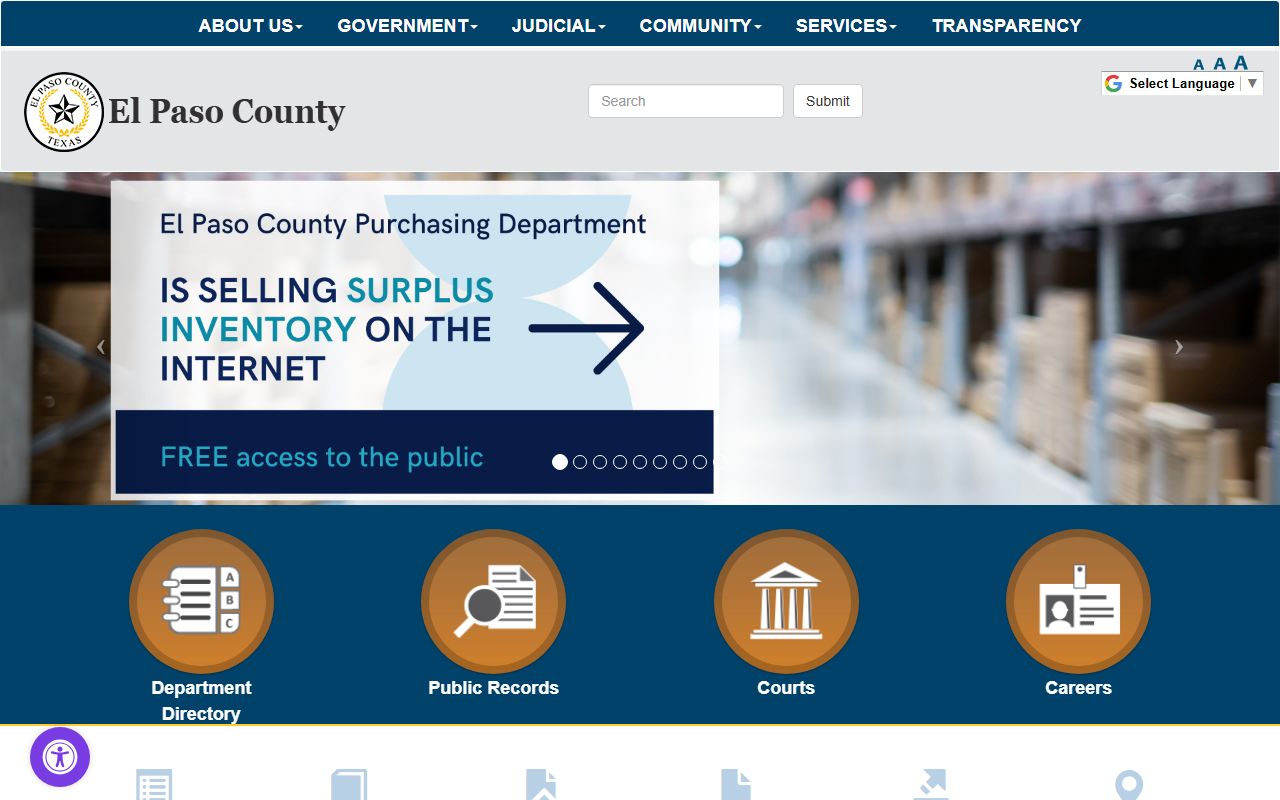
Use the El Paso County website to find contact information for the District Clerk and other county offices before visiting downtown El Paso.
Lead-in: The El Paso County District Clerk page has the fee schedule, request forms, and details on how to submit a records request by email or in person.
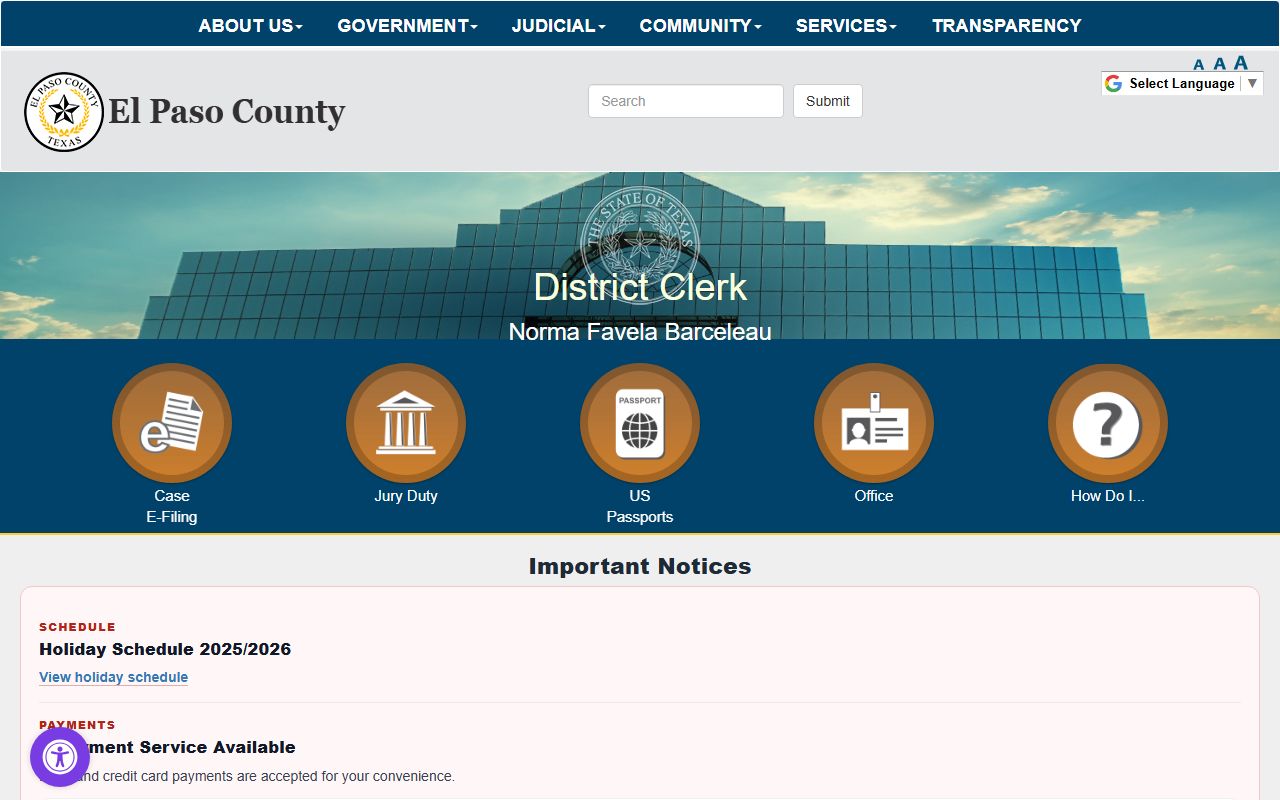
The District Clerk page includes information on fees updated under SB1612, e-filing options, and how to request a case file or copy by email.
How to Search El Paso County Divorce Records
El Paso County divorce records can be searched online or in person. Start with the statewide re:SearchTX portal, which covers Texas district courts and lets you look up cases by party name or cause number. You can see basic case info, docket entries, and case status for free. El Paso County also has its own public portal for case searches, accessible through the District Clerk's website.
To request a file in person, visit the District Clerk's office at 500 E. San Antonio, Suite 103. Bring a valid photo ID and the names of both parties or a cause number. Staff can pull the case from the Records Request Division, which maintains locations on all case files. For a copy of the full file or a certified copy of the Final Decree, submit a request and pay the applicable fee. The fee schedule is available on the District Clerk's website.
El Paso County also accepts records requests by email. Send your request to districtclerk@epcounty.com. Include the names of both parties, the cause number if you have it, the approximate year, and whether you need a plain copy or a certified copy. The office will confirm the cost and how to pay. Convenience fees may apply for certain payment methods.
For self-represented litigants who need to file documents or access records online, the Texas e-filing self-help portal at selfhelp.efiletexas.gov is available. It walks you through the process step by step. The Texas DSHS Vital Statistics Section can also issue a verification letter for divorces granted in Texas since 1968, though that letter does not include the full decree.
How to File for Divorce in El Paso County
Divorces in El Paso County are filed with the District Clerk under Texas Family Code Chapter 6. One spouse must have lived in Texas for at least six months and in El Paso County for 90 days before filing. That rule is in Section 6.301. If you just moved to El Paso County, you may need to wait before you qualify to file here.
Texas allows no-fault divorce. The insupportability ground under Family Code Section 6.001 means the marriage has broken down due to conflict with no reasonable chance of reconciliation. You do not have to prove anyone caused the breakup. This is the most common ground used in Texas divorces. Fault grounds like cruelty, adultery, abandonment, and felony conviction are also available. In El Paso, as in all Texas counties, the petitioner chooses which ground to cite when they file the Original Petition for Divorce.
After filing, the other party is served with the petition or signs a Waiver of Service. Texas then requires a 60-day waiting period before the divorce can be granted, per Section 6.702. Exceptions exist for family violence cases. El Paso County handles a large volume of divorce cases, so the court system moves efficiently once the waiting period ends. Agreed cases can be finalized at a brief uncontested hearing. Contested cases may go to mediation first or proceed to a full trial before the judge.
Fee Waiver: If you cannot afford court fees, you may file a Statement of Inability to Afford Payment of Court Costs. This form is available at the courthouse and through the Texas e-filing self-help portal. The court decides whether to grant a waiver based on your financial information.
Texas is a community property state. Under Family Code Chapter 7, the court divides marital property in a manner that is just and right. Community property is what was acquired during the marriage. Separate property, including what each spouse owned before marriage or received as a gift or inheritance kept apart from marital assets, is not divided. All property decisions become part of the Final Decree of Divorce.
What El Paso County Divorce Records Contain
Divorce records in El Paso County are maintained permanently by the District Clerk. A case file includes the Original Petition for Divorce, all motions and orders filed during the case, financial affidavits, any property agreements, and the Final Decree of Divorce. The Final Decree is the most requested document. It spells out all terms the court ordered: property and debt division, child conservatorship and possession schedule, child support, spousal maintenance, and name change orders.
Most El Paso County divorce records are public. You do not need to be a party to request a search or plain copies. Certain documents, like sealed financial records or records involving minor children under court protection, may be restricted. The District Clerk can advise you on what is accessible for a specific case. The office handles a high volume of requests, so having the cause number or both party names ready will speed things up considerably.
Certified copies of the Final Decree are commonly needed for legal name changes, remarriage, Social Security updates, bank account changes, and immigration matters. These carry the court's official seal and cost more than plain copies. The current fee schedule is available from the District Clerk's office and on their website. The Texas DSHS Vital Statistics Section maintains a state index of divorces since 1968, but that index is not a substitute for the certified decree when you need the full terms of the court order.
Note: El Paso County divorce records go back many decades. For older cases, the Records Request Division can tell you whether those records are on microfilm, paper, or in electronic format.
Legal Help for Divorce in El Paso County
El Paso County has a range of legal resources for people dealing with divorce cases. The El Paso County Bar Association can provide referrals to licensed family law attorneys in the area. Use the State Bar of Texas online directory at texasbar.com to search for attorneys by location and practice area. Many offer an initial consultation at a reduced cost.
For income-eligible residents, Texas RioGrande Legal Aid serves the El Paso area and provides free civil legal help for family law matters including divorce and custody. Their services are available in both English and Spanish, which is important given El Paso County's bilingual community. Contact them directly to ask about eligibility and available services.
Texas Law Help offers free self-help guides and official court forms in English and Spanish. The Texas e-filing self-help portal at selfhelp.efiletexas.gov walks self-represented litigants through the filing process step by step. Supreme Court Approved Divorce Forms are available at no cost through txcourts.gov. If you cannot pay filing fees, ask the District Clerk about the fee waiver process.
Cities in El Paso County
El Paso County's primary city is El Paso, which serves as both county seat and the largest city. Socorro, Horizon City, and Anthony are other communities in the county. All divorce cases from El Paso County are filed at the District Clerk's office at 500 E. San Antonio in downtown El Paso.
Nearby Counties
El Paso County is at the far western tip of Texas and borders New Mexico and the Mexican state of Chihuahua. The counties listed below are adjacent or nearby within Texas.