
Find Divorce Records in Hartley County
Hartley County divorce records are maintained by the District Clerk in Channing, Texas. Channing is a small rural county seat in the Texas Panhandle. If you need to search divorce records filed in Hartley County, the District Clerk's office is where those case files and final decrees are stored. You can visit in person during business hours or contact the clerk by phone to ask about records requests. The statewide online court search tool may also have case information for recent filings.
Hartley County Overview
Hartley County District Clerk
The District Clerk in Channing is responsible for all divorce records in Hartley County. The clerk files divorce petitions, maintains case documents, and provides copies when requested. Hartley County is a small, rural county in the Texas Panhandle, and the courthouse in Channing handles all district court matters for the county.
Hartley County is served by the 69th District Court, which covers multiple counties in the Panhandle region. Because this is a low-population county, the docket is smaller than urban counties, and the staff can often give you more direct help with your records search. You can reach the courthouse by phone to ask what you need before making the drive to Channing.
The county website at co.hartley.tx.us lists county office contacts and public notices, including emergency orders and county governance information. For divorce records, call the District Clerk directly.
| Office | Hartley County District Clerk |
|---|---|
| Address |
Hartley County Courthouse P.O. Box 147 Channing, TX 79018 |
| Phone | (806) 235-3582 |
| Hours | Monday through Friday, 8:00 AM to 5:00 PM |
| Website | co.hartley.tx.us |
How to Search Hartley County Divorce Records
For Hartley County divorce records, your two main options are the statewide online system and an in-person visit to the courthouse. Online access is available through the re:SearchTX portal, which covers many Texas district courts. You can search by party name or cause number. Not every older record may be online, so in-person requests are often needed for cases filed before electronic records became common.
If you want to confirm whether a divorce was registered with the state, you can contact the Texas DSHS Vital Statistics Section. They maintain a divorce index from 1968 forward and can issue a verification letter. The letter confirms the divorce is on file but does not include the full decree or detailed case documents. For those, you go directly to the District Clerk in Channing.
When you contact the clerk, have the full name of one or both spouses and the year of the divorce ready. If you know the cause number, that will speed things up. The clerk can search their records and tell you the cost to get copies before you pay anything.
The Hartley County official website provides public notices and county contact information for residents.
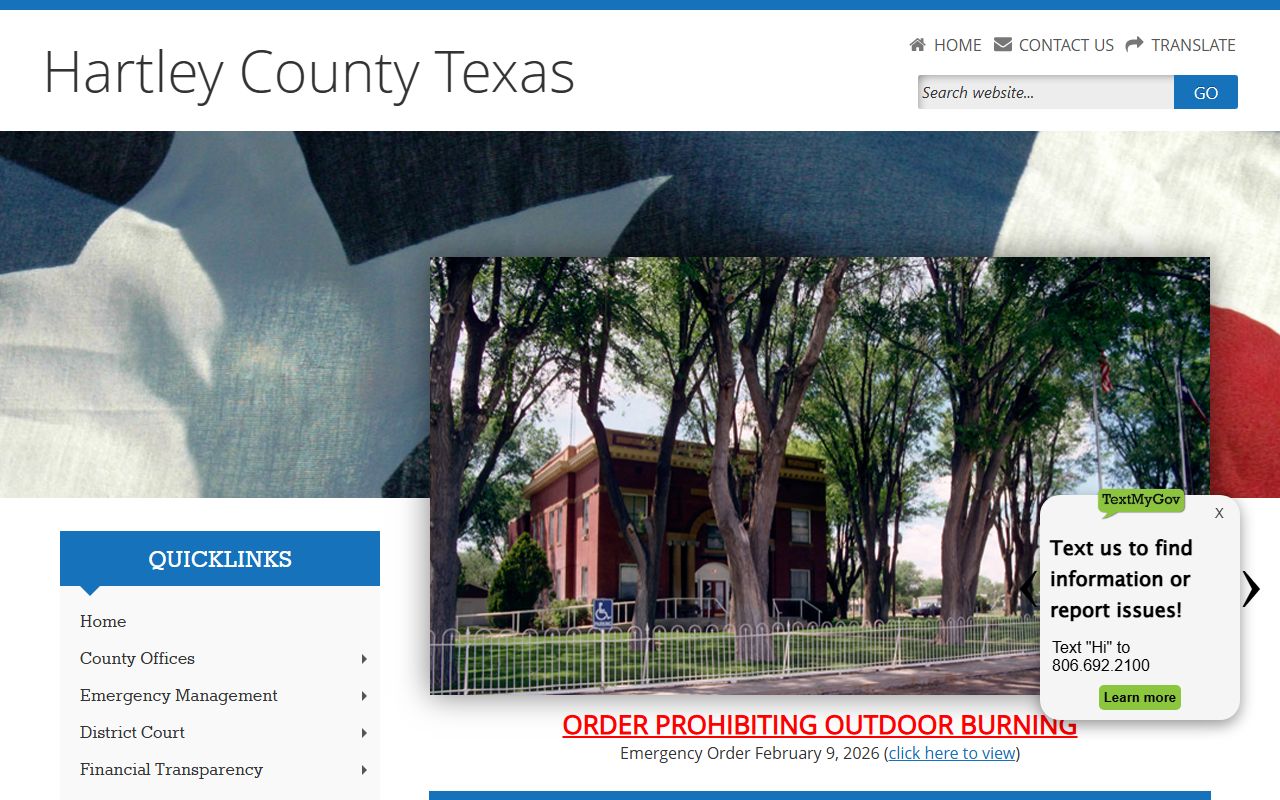
The county posts emergency orders, employee recognition announcements, and office contacts for residents seeking courthouse services.
Hartley County Divorce Fees
Divorce filing fees in Hartley County are set by the District Clerk and include base court fees plus state-mandated surcharges. A basic divorce petition for a couple without minor children typically runs around $250 in smaller Panhandle counties, though the exact amount can vary. Cases with children may cost more. Always call the clerk to confirm the current fee before you file.
Additional costs include service of process. If the other party does not sign a waiver of service, you will need a constable or process server to serve the papers. That usually adds $50 to $100. After the case is over, certified copies of the Final Decree of Divorce cost a per-page fee plus a certification charge. Call the clerk for exact copy costs.
If you cannot pay the fees, you may qualify for a waiver. Texas Rule of Civil Procedure 145 lets you file a Statement of Inability to Afford Payment of Court Costs. You need to show proof of your financial situation. Forms are at the courthouse or online at txcourts.gov.
Divorce Filing Process in Hartley County
The divorce process in Hartley County follows Texas Family Code Chapter 6. All records created during this process are filed and kept by the District Clerk in Channing.
To file, at least one spouse must have lived in Texas for six months and in Hartley County for at least 90 days. This rule comes from Texas Family Code § 6.301. If you meet that requirement, you file an Original Petition for Divorce with the clerk. The other spouse must be served with the petition and a citation, or they can sign a Waiver of Service.
Most divorces in Texas use the no-fault ground of insupportability under Texas Family Code § 6.001. This means the marriage has broken down because of conflict or discord, with no real chance of fixing it. You do not have to prove anyone did something wrong. Fault grounds like cruelty (§ 6.002) or adultery (§ 6.003) are also available and may affect how the court divides property.
After filing, there is a mandatory 60-day waiting period before the divorce can be finalized. This comes from Texas Family Code § 6.702. If both spouses agree on everything, they can sign an agreed decree and ask the judge to sign it after the 60 days. If they disagree, the case can take much longer. Property division in Texas follows community property rules, meaning most assets and debts from the marriage are split in a way the court finds just and right.
What Hartley County Divorce Files Include
Divorce records in Hartley County include all court documents from the case. The file starts with the Original Petition for Divorce and any response filed by the other spouse. It also includes any motions, agreements, financial disclosures, and court orders entered during the case.
The Final Decree of Divorce is the key document. This order ends the marriage and sets out all the terms. It covers who gets the house, the cars, and other property. It addresses how debts are divided. If there are children, it covers who has conservatorship, the possession schedule, and any child support. Spousal maintenance, if ordered, is also spelled out here. People use certified copies of this decree when they need proof of their marital status or to carry out the terms of the order.
Under Texas law, most divorce records at the District Clerk's office are public. Anyone can request copies. The clerk can tell you if any documents in a specific file are sealed or restricted by court order.
Legal Help for Hartley County Residents
Legal resources in the Panhandle can be limited for a small county like Hartley. Still, there are options. Texas Legal Aid groups serve rural areas, and self-help tools are available online.
Lone Star Legal Aid serves parts of the Texas Panhandle and offers free help with family law matters for people who qualify based on income. Call (800) 733-8394 or check lonestarlegal.org to find out if they can assist you. The State Bar of Texas runs a lawyer referral line at (800) 252-9690, and you can find attorneys at texasbar.com.
For free self-help guides and official divorce forms, visit texaslawhelp.org. Court forms approved for use in Texas are also at txcourts.gov. These resources can help you understand what forms to file and what the process looks like before you visit the courthouse.
Cities in Hartley County
Hartley County is a sparsely populated Panhandle county. The main community is Channing, which serves as the county seat. Other small communities in the county include Dalhart (which also extends into Dallam County) and Hartley. All divorce cases filed by Hartley County residents go through the District Court in Channing.
No cities in Hartley County meet the population threshold for individual city pages on this site. Amarillo, which is in Potter and Randall counties, is the nearest major city and has its own page at Amarillo.
Nearby Counties
Hartley County is in the Texas Panhandle. Check your address to confirm which county you live in before filing. You file in the county where you or your spouse has lived for at least 90 days.