
San Augustine County Divorce Records
San Augustine County divorce records are filed and stored at the District Clerk's office in San Augustine, Texas. The clerk holds all divorce case files for the county, including the original petition, service papers, any agreed terms, and the Final Decree of Divorce. If you need to look up a case or get a certified copy of a decree, the District Clerk's office in San Augustine is where you start. You can search online through the statewide court portal or visit the courthouse in person. Older records may require more time to locate, but staff can help find cases going back many years.
San Augustine County Overview
San Augustine County District Clerk
The District Clerk in San Augustine handles all divorce records for the county. Every document filed in a divorce case is kept at this office. Staff can search by party name or cause number and provide copies of documents in the file. The courthouse in San Augustine is where all district court matters including family law are handled.
San Augustine County is in East Texas, bordered by Sabine County to the south and Shelby County to the north. It is a small, rural county with a single courthouse serving all district court needs. To file for divorce here, at least one spouse must meet the residency requirement under Texas Family Code § 6.301, which means living in San Augustine County for at least 90 days and in Texas for six months before filing.
| Office | San Augustine County District Clerk |
|---|---|
| Address |
San Augustine County Courthouse 100 W. Columbia Street San Augustine, TX 75972 |
| Phone | (936) 275-2762 |
| Hours | Monday through Friday, 8:00 AM to 5:00 PM |
| Website | co.san-augustine.tx.us |
How to Search San Augustine County Divorce Records
The best online option for searching San Augustine County divorce records is the statewide re:SearchTX portal run by the Texas Office of Court Administration. You can search by the name of either party or by cause number if you have it. The system shows docket entries, case status, and basic party information.
Not every older case shows up in the online system. If you cannot find what you need through the portal, contact or visit the District Clerk's office in San Augustine. Staff can look up cases in person and tell you what documents are available. Call ahead to ask about retrieval times for older files.
San Augustine County's official website has contact details for county offices including the District Clerk's office.
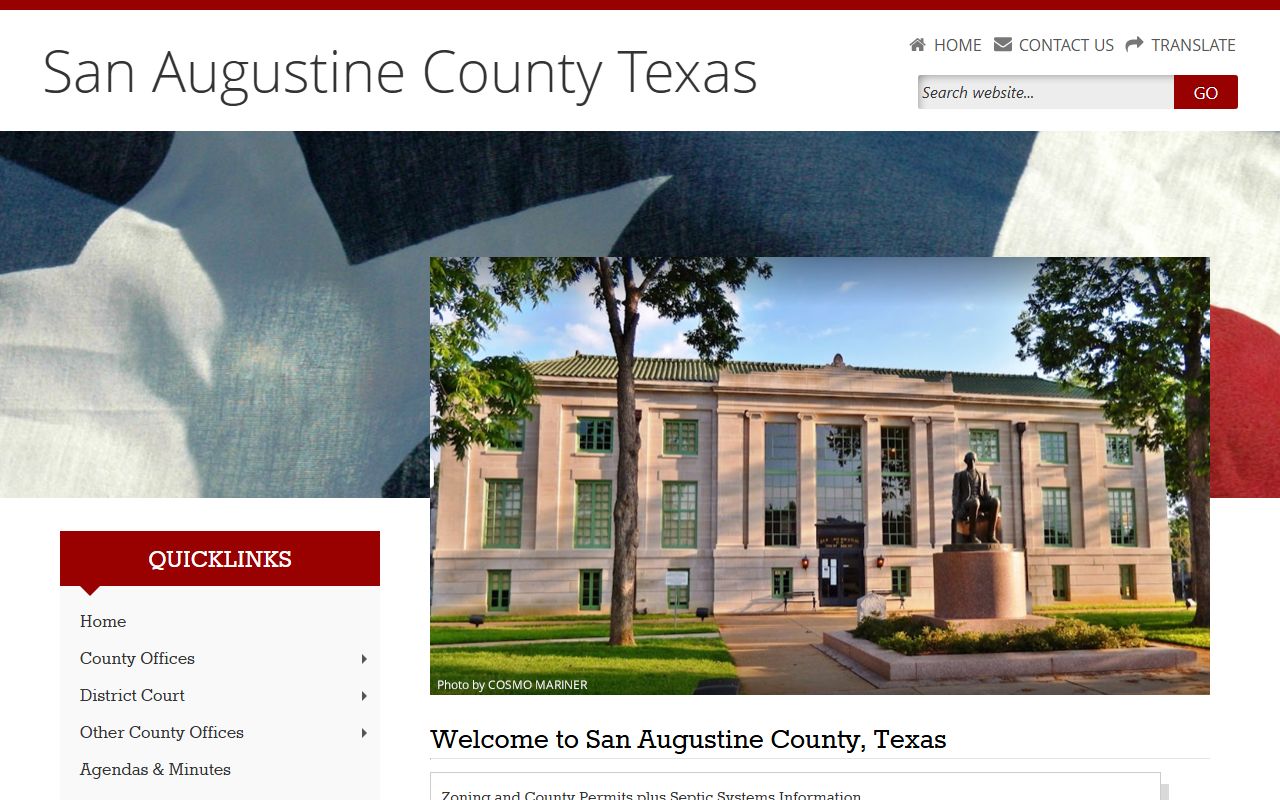
The county website offers direct access to contact information for the District Clerk and other local offices that serve residents in San Augustine.
The Texas DSHS marriage and divorce verification service confirms whether a divorce was filed in Texas from 1968 forward. It does not include the full decree. For the actual court documents, you need the District Clerk.
When you search at the courthouse, bring a full name and approximate year. Certified copies of the final decree carry a per-page fee plus a certification charge. Plain copies cost less. You will need a photo ID to pick up copies in person.
Filing for Divorce in San Augustine County
Divorce cases in San Augustine County follow Texas state law. The process starts by filing the Original Petition for Divorce at the District Clerk's office under Texas Family Code Chapter 6. Every filing from that point on becomes part of the permanent public court record.
Texas requires a 60-day waiting period before a judge can sign a final decree. Under Family Code § 6.702, the clock starts on the day the petition is filed. Even when both spouses agree on everything, they still have to wait. Exceptions apply when the filing involves family violence.
The no-fault ground under Family Code § 6.001 is the most common ground used in Texas divorces. It means the marriage has broken down due to conflict with no chance of recovery. No one needs to prove the other did something wrong. Fault grounds are also available. Cruelty under § 6.002 and adultery under § 6.003 are the most common. Proving fault can affect how the court divides property.
Texas follows community property rules under Family Code Chapter 7. Property gained during the marriage is split in a just and right way. Separate property, meaning what each spouse owned before marriage plus gifts and inheritances they kept separate, stays with that person. All division terms are written into the Final Decree and filed with the District Clerk.
What San Augustine County Divorce Records Contain
Every document filed in a San Augustine County divorce case ends up in the case file at the District Clerk's office. The Original Petition for Divorce starts the file. It names the parties, states the grounds, and lists what the filing spouse wants. If the other spouse files a response, that becomes part of the record too.
The Final Decree of Divorce is the most important document. It is the court order that ends the marriage and sets out the terms both parties must follow. The decree covers property and debt division, conservatorship, a possession schedule for any children, and any support amounts. Courts keep final decrees permanently under Texas Government Code § 51.303.
Other items that may be in the file include service papers, waivers, temporary orders, financial affidavits, and property inventories. Most of these are public record. Some financial source documents or items involving minor children may be sealed or restricted. Check with the District Clerk if you are unsure what you can access in a given case.
Legal Help in San Augustine County
Several resources exist for people in San Augustine County who need help with a divorce case. Legal aid can cover family law matters for those who qualify based on income. Paid attorney services are also available through the State Bar referral service.
Lone Star Legal Aid covers East Texas, including San Augustine County. Call (800) 733-8394 or check lonestarlegal.org to see if you qualify for free legal help with your divorce case. If you need a private attorney, the State Bar of Texas referral line is (800) 252-9690 and their attorney search is at texasbar.com.
Self-help divorce guides and forms are available for free at texaslawhelp.org. The Texas Supreme Court has approved standard divorce forms you can download at no cost from txcourts.gov. These cover uncontested divorces both with and without minor children.
Cities in San Augustine County
San Augustine County is a small, rural county. All divorce cases for county residents go through the District Court in San Augustine.
The main community is San Augustine, the county seat. Other small communities in the county do not meet the threshold for a dedicated city page. All divorce filings in San Augustine County are handled at the courthouse in San Augustine.
Nearby Counties
These counties border San Augustine County. Check where you have lived for the past 90 days to confirm which county handles your divorce case.