
Find Divorce Records in Dallas
Dallas divorce records are filed with the Dallas County District Clerk, not the City of Dallas. If you need to find a divorce case, get a copy of a Final Decree of Divorce, or look up a cause number in Dallas, you go through the Dallas County District Clerk's office. The Records Information Office handles copy requests, and an email option is available for those who can't come in person. Dallas is one of the busiest family courts in Texas, so knowing exactly where to go and what to ask for will save you time.
Dallas Overview
Where Dallas Divorce Records Are Kept
Dallas divorce records live with the Dallas County District Clerk. The District Clerk is responsible only for district courts. It does not handle records for Dallas City Hall or other county departments. That distinction matters when you're trying to find the right office. City Hall at dallascityhall.com manages municipal services, permits, utilities, and city council business. Divorce records are not part of that system.
The George L. Allen, Sr. Courts Building is the main location for Dallas County District Court. It sits in downtown Dallas on Commerce Street. That building houses the Records Information Office where you can request copies of divorce decrees and case files. The Frank Crowley Courts Building is also utilized for some court operations.
| Office | Dallas County District Clerk - Records Information Office |
|---|---|
| Address | George L. Allen, Sr. Courts Building 600 Commerce Street, Suite 103 Dallas, TX 75202 |
| Phone | (214) 653-7307 |
| DCRecords@dallascounty.org | |
| Website | dallascounty.org |
The Dallas County Clerk has a separate office at 500 Elm Street, Suite 2100, phone (214) 653-7099. That office handles real estate records and vital records like marriage licenses. Do not confuse the two. Divorce decrees come from the District Clerk, not the County Clerk.
The Dallas County website at dallascounty.org has an overview of county services. The District Clerk page has links to the divorce filing process, records request procedures, and contact details for specific divisions.
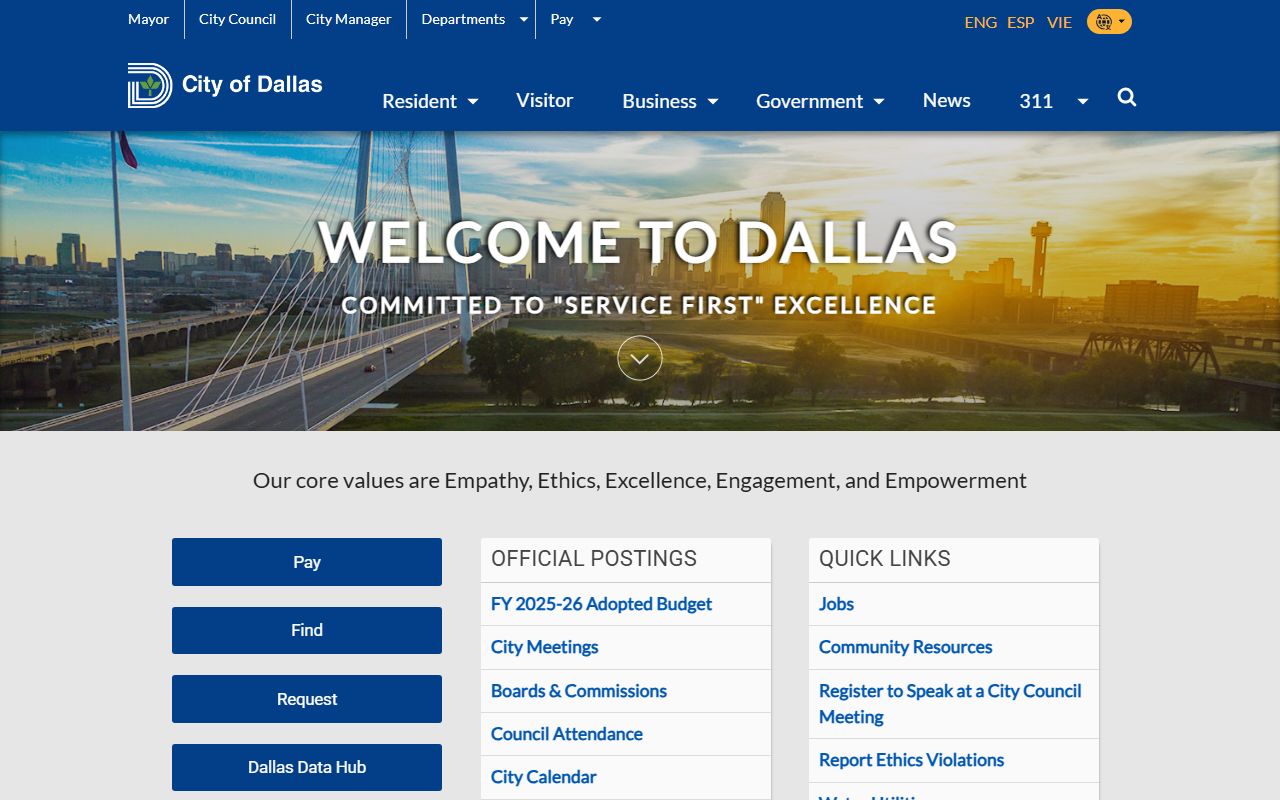
The City of Dallas at dallascityhall.com handles municipal services. Divorce records, however, are maintained by the Dallas County District Clerk at the Allen Courts Building on Commerce Street.
How to Search Dallas Divorce Records
Dallas County family court records are not available through the county's online public record search. Dallas County removed family court records from its online subscription service in 2018 to protect the privacy of minors. That means you cannot look up divorce cases the same way you might search property or criminal records online in Dallas County.
To get divorce records in Dallas, you need to contact the Records Information Office directly. You can email DCRecords@dallascounty.org or call (214) 653-7307. There is a Divorce Decree Request Form available from the District Clerk. You can also visit in person at the George L. Allen, Sr. Courts Building on Commerce Street. Staff can look up cases and make copies on site.
The statewide re:SearchTX portal may show some case index information for Dallas County. It won't give you the full decree, but it can confirm a case exists and provide a cause number. Use that number when you contact the Records Office to make your request more specific.
When you contact the Records Information Office, have the full name of at least one spouse ready, along with the year the case was filed if you know it. If you have a cause number already, include it. Requests without enough identifying information can slow things down.
Note: Dallas County family court records are intentionally restricted from online access for child privacy reasons. In-person or email requests are required for divorce decrees and related family law documents.
Divorce Filing Process in Dallas
Dallas residents file for divorce in Dallas County District Court following Texas state law. Each filing creates records that are maintained by the District Clerk. Texas law governs all aspects of the process, from grounds to waiting periods to how property is split.
Residency must be established first. Under Texas Family Code § 6.301, one spouse must have lived in Texas for six months and in Dallas County for 90 days before filing. If you recently moved to Dallas, you may need to wait before you can file here.
Texas allows no-fault divorce under Texas Family Code § 6.001. The no-fault ground is insupportability. You say the marriage can't be saved due to conflict or discord, and that's enough. No one has to be at fault. Fault grounds like cruelty under § 6.002, adultery under § 6.003, and felony conviction under § 6.004 are also options if they apply.
The filing starts with an Original Petition for Divorce. The other spouse is served with the petition and a citation. If both parties agree on all terms, they file an agreed decree and the process is faster. Contested cases may require mediation or a hearing before a judge. The Dallas County District Clerk has a Self Help Legal Clinic at the courthouse to assist people who file without an attorney.
Texas requires a 60-day waiting period after the divorce petition is filed before the court can sign a final decree. Dallas County also offers a self-help legal clinic at the courthouse for people filing without an attorney.
Dallas Divorce Filing Fees
Filing fees for divorce in Dallas County are set by the District Clerk and can change. A divorce without children typically costs around $350. Cases with children may run a bit higher. Check with the District Clerk at (214) 653-7307 for current amounts, or look at the fees page on the Dallas County District Clerk website.
Requesting copies of a divorce decree costs extra. Certified copies carry both a per-page fee and a certification charge. Plain copies cost less. If you need the decree for a legal purpose like proving marital status or enforcing a court order, you'll need the certified version.
If paying the filing fee is a hardship, you can ask the court for a waiver. Texas Rule of Civil Procedure 145 lets you file a Statement of Inability to Afford Payment of Court Costs. Show your income and expenses, and the court decides whether you qualify. Forms for this are available at txcourts.gov and at the courthouse clerk's window. People who receive government benefits or whose income is below 125% of the federal poverty line generally qualify.
Legal Resources for Dallas Divorce
Dallas has a range of legal resources for people going through a divorce. Some are free. Others charge reduced rates for qualifying individuals. Even if you plan to file on your own, a consultation can help you understand what to expect and catch any issues before they become problems.
Lone Star Legal Aid serves the Dallas area and handles family law cases for low-income residents. Call (800) 733-8394 or visit lonestarlegal.org to check your eligibility. The Dallas Volunteer Attorney Program also offers legal help for those who qualify. The State Bar of Texas lawyer referral service at (800) 252-9690 can connect you with a family law attorney. You can also search online at texasbar.com.
TexasLawHelp at texaslawhelp.org has free step-by-step divorce guides. Official court forms are available for free at txcourts.gov. The e-filing portal at efile.txcourts.gov accepts filings from self-represented parties in Dallas County.
Handling Your Own Dallas Divorce
Some Dallas residents choose to file for divorce without an attorney. It works well when both sides agree and the case isn't complex. Even so, the paperwork needs to be correct. Errors in the petition or decree can delay your case or cause it to be sent back for corrections.
The Dallas County District Clerk has a Self Help Legal Clinic at the courthouse. Staff there can answer questions about forms and procedures. They can't give legal advice, but they can help you find the right forms and make sure your documents are complete before you file.
Community property rules in Texas mean any assets or debts built up during the marriage are subject to division. Under Chapter 7 of the Texas Family Code, a judge divides property in a way that is just and right. If children are involved, the court requires a parenting plan, a conservatorship order, and a child support calculation under Texas Family Code Chapter 154. Dallas County may also require parents to complete a parenting class before finalizing a divorce that involves minor children.
Dallas County Divorce Records
Dallas is the county seat of Dallas County. All divorce filings and records go through the Dallas County District Clerk. For more details on the county court system, fees, and how to request records, visit the Dallas County divorce records page.
Nearby Texas Cities
Other major Texas cities near Dallas also have divorce records pages with local courthouse details.
- Fort Worth - Tarrant County
- Arlington - Tarrant County
- Plano - Collin County
- Garland - Dallas County
- Irving - Dallas County