
Hunt County Divorce Records Lookup
Hunt County divorce records are kept at the District Clerk's office in Greenville, Texas. The District Clerk maintains all family court filings, including divorce petitions, orders, and final decrees. If you need to search a divorce case or get a certified copy of a decree, the Greenville courthouse is where you go. The re:SearchTX portal also lets you look up basic case details online before visiting in person. Hunt County is northeast of Dallas and is served by the district courts in Greenville.
Hunt County Overview
Hunt County District Clerk
The Hunt County District Clerk office in Greenville handles all family law filings for the county. That includes divorce cases from start to finish. The clerk files petitions, issues citations, dockets all court activity, and keeps the official file. When the judge signs the Final Decree of Divorce, that document goes into the file and becomes a permanent record at the courthouse.
Hunt County has a history of scam alerts involving false claims that appear to come from the District Clerk's office. If you receive an unsolicited message claiming to be from the Hunt County District Clerk or TxDMV, do not click any links or respond. The county has warned residents to delete such messages and contact the clerk's office directly. Always use the official number or website when you need to reach the District Clerk for legitimate records requests.
| Office | Hunt County District Clerk |
|---|---|
| Address |
Hunt County Courthouse 2500 Lee Street Greenville, TX 75401 |
| Phone | (903) 408-4172 |
| Hours | Monday through Friday, 8:00 AM to 5:00 PM |
| Website | huntcounty.net |
Searching Hunt County Divorce Records
The re:SearchTX system is the easiest way to start. It includes Hunt County district court cases. Search by one party's name or by cause number. The results show filing dates, case status, and party names. You won't get the actual documents through the online portal, but you can confirm a case exists and get the cause number you'll need for a records request.
For paper copies, contact the District Clerk in Greenville. You can go in person or send a written request by mail. Include the names of both parties and the year the divorce was filed. If you have the cause number, include that too. Staff will look up the file and can make plain copies or certified copies. Certified copies cost more but are required when you need to show the decree to another agency. Ask about fees before you submit payment.
The Texas DSHS also keeps a statewide divorce index for events from 1968 forward. A verification letter from DSHS confirms a divorce took place and in which county. This is not the actual record, but it works for many administrative and legal purposes where you just need to show the divorce happened.
Security reminder: The Hunt County District Clerk does not send unsolicited text messages or emails. Contact the office directly using the official phone number if you have questions about a case.
The Hunt County official website includes information for the District Clerk's office and links to county government resources for Greenville and surrounding communities.
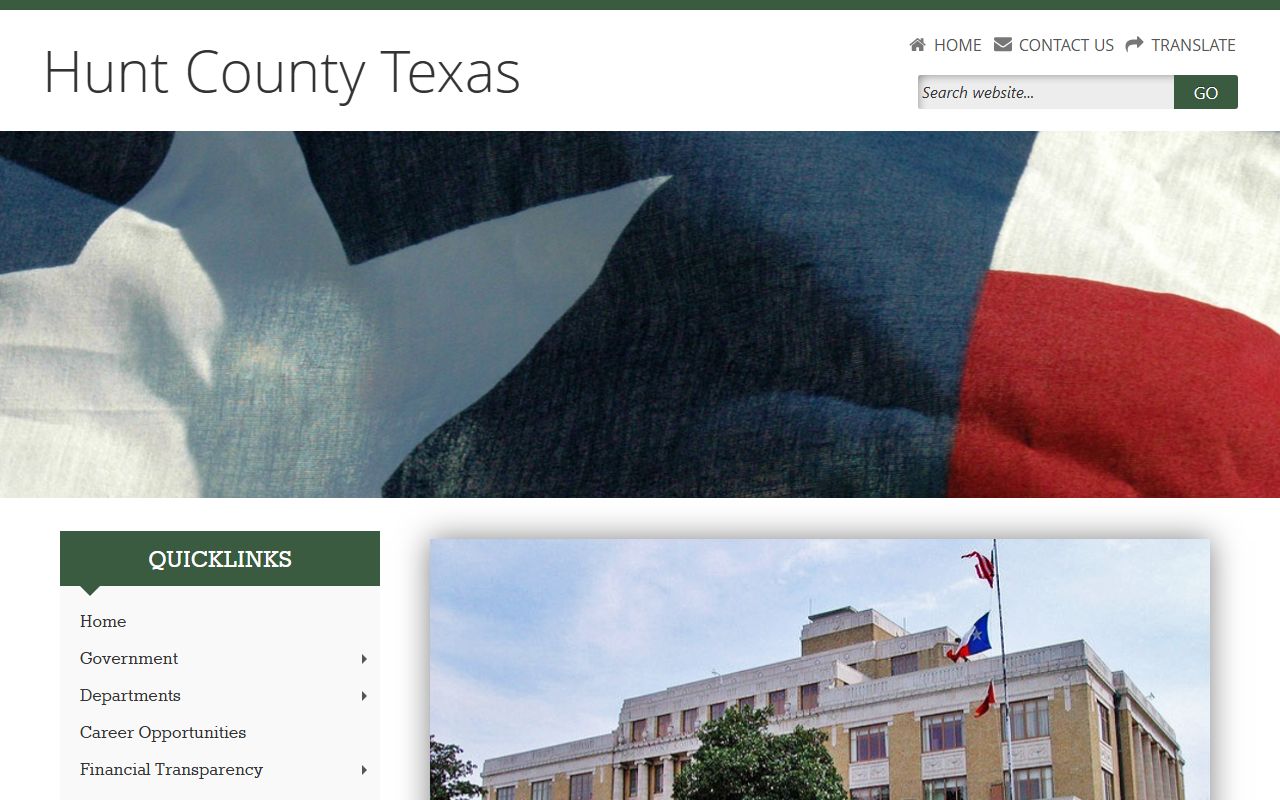
The District Clerk's office in Greenville handles all divorce filings for Hunt County residents. Contact them directly to request case searches or document copies.
Filing for Divorce in Hunt County
To file for divorce in Hunt County, at least one spouse must have lived in Texas for six months and in Hunt County for at least 90 days. This is the residency requirement under Texas Family Code § 6.301. You file the Original Petition for Divorce at the District Clerk's office in Greenville. After filing, a citation issues and the other party must be served.
Texas law sets a mandatory 60-day waiting period under Texas Family Code § 6.702. No divorce can be granted until 60 days have passed from the petition filing date. This rule applies to all cases except those involving family violence. Many Hunt County divorces finish shortly after the 60-day period when both spouses agree on all terms.
Most divorces in Hunt County cite insupportability as the ground, which is the no-fault option under Texas Family Code § 6.001. You can also raise fault grounds like cruelty or adultery if relevant. Property is divided under community property rules found in Texas Family Code Chapter 7. Free court forms for self-represented litigants are available at txcourts.gov.
What's in a Hunt County Divorce File
A Hunt County divorce file at the District Clerk's office includes all documents filed during the case. The file starts with the Original Petition and ends with the Final Decree of Divorce. In between, there may be a waiver of service, agreed temporary orders, inventory and appraisement documents, a parenting plan, and any motions or responses. Everything gets filed and indexed by cause number.
The Final Decree of Divorce is the most requested document. It is the court's order ending the marriage. It covers property division, conservatorship of children, possession schedules, child support, and spousal maintenance if any. Certified copies of the decree are used for name changes, Social Security updates, benefit applications, and legal identification purposes. The clerk can certify copies with the official seal.
Under Texas Government Code § 51.303, divorce records in Hunt County are public. Anyone can request access to most documents in a case file. Records sealed by a judge are not available to the public. Documents with protected child information may have limited access under court rules.
Legal Help in Hunt County
Lone Star Legal Aid covers the Hunt County area. They take family law cases including divorce, custody, and protective orders for clients who qualify by income. Call (800) 733-8394 to see if you're eligible. Their services are free for qualifying residents, and they handle a broad range of family law matters. The office can also refer you to other resources if they can't take your case.
For self-help, TexasLawHelp.org has plain-language guides and official Texas Supreme Court forms for divorce. This is a useful resource if you plan to represent yourself. You can also call the State Bar of Texas lawyer referral line at (800) 252-9690 or find an attorney online at texasbar.com. The Texas Judicial Branch website also has resources about the court system and how cases are handled.
Cities in Hunt County
Greenville is the county seat of Hunt County. All divorce cases filed by Hunt County residents go through the District Court in Greenville.
Other communities in Hunt County include Commerce, Quinlan, Caddo Mills, and Wolfe City. Hunt County is also home to Texas A&M University-Commerce. All divorce filings in the county are handled by the Hunt County District Clerk in Greenville.
Nearby Counties
Hunt County borders several Northeast Texas counties. The county where you live at the time of filing is where your divorce case must be filed.