
Find Divorce Records in Kinney County
Kinney County divorce records are kept by the District Clerk in Brackettville, a small South Texas town near the Mexican border that serves as the county seat. All divorce cases filed in Kinney County go through the district court in Brackettville, and the clerk's office stores every case file. If you need to search for a divorce, get a certified copy of a Final Decree of Divorce, or confirm the details of a past case, the District Clerk in Brackettville is where you start. This is a rural county with a modest population, so the process is usually fairly direct once you reach the right office.
Kinney County Overview
Kinney County District Clerk
The Kinney County District Clerk in Brackettville manages all court records for the county, including divorce filings. The office processes new petitions, maintains the court index, and stores case files after the case is closed. Staff can look up divorces by party name or case number and make copies on request.
Kinney County is part of the 63rd Judicial District. This judicial district covers multiple rural counties in Southwest Texas, and the district judge travels between them. The District Clerk in Brackettville keeps all Kinney County case records on file. The office is in the Kinney County Courthouse in downtown Brackettville.
Visit the Kinney County website for the most current contact information. Since the county is small, it is worth calling before you make the drive to confirm the office is open and staffed the day you plan to visit.
| Office | Kinney County District Clerk |
|---|---|
| Address |
Kinney County Courthouse 501 Ann St Brackettville, TX 78832 |
| Phone | (830) 563-2521 |
| Hours | Monday through Friday, 8:00 AM to 5:00 PM |
| Website | co.kinney.tx.us |
The Kinney County official website lists contact information for county offices and is the best starting point before your visit.
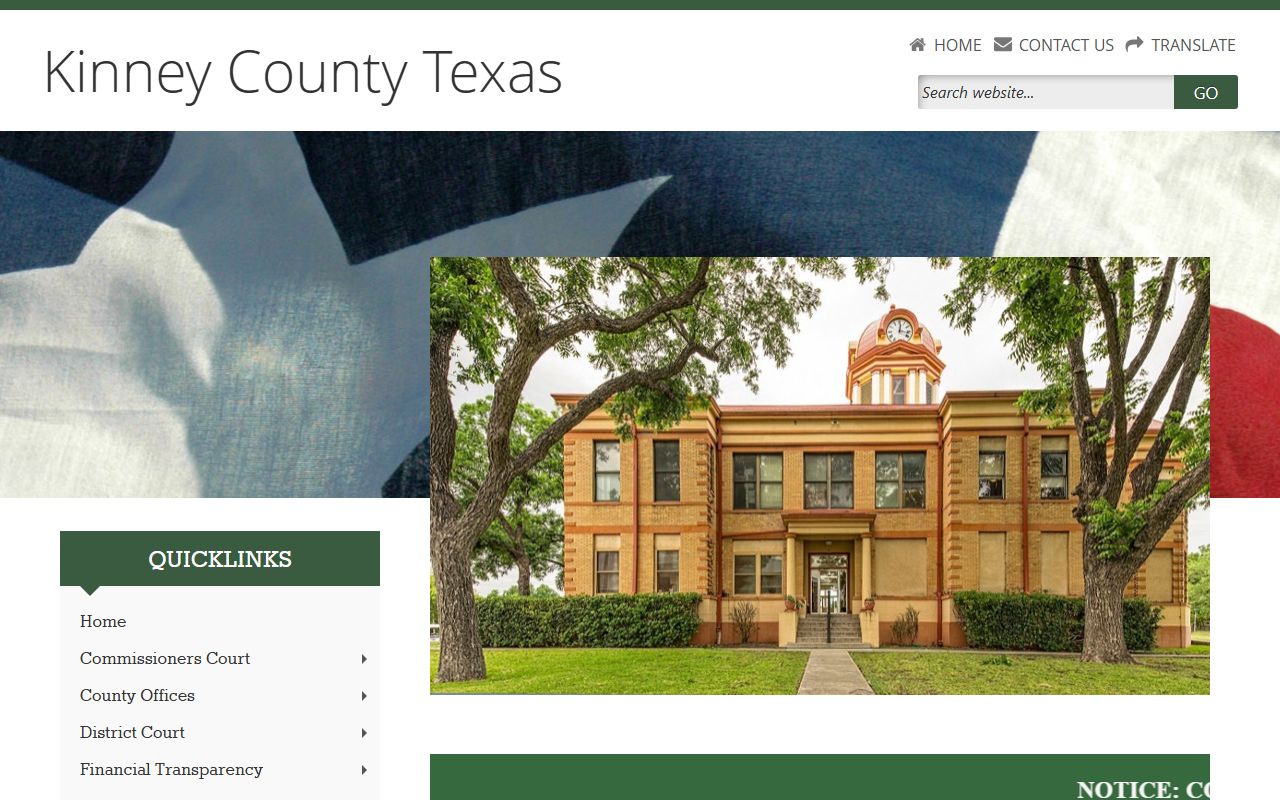
Confirming that the office is open before traveling to Brackettville is especially important for those coming from distant communities.
Searching Divorce Records in Kinney County
The most direct way to find a Kinney County divorce record is to call or visit the District Clerk in Brackettville. There is no standalone online case portal for the county. The statewide re:SearchTX system may include some Kinney County cases, especially more recent ones, and is a free resource worth checking before you make the trip. It lets you search by party name and can give you case numbers and basic docket information.
When searching, give the clerk the names of both parties and a rough year for the filing. That is usually enough to locate the case. If you have the cause number, searches go faster. The clerk can pull the file and let you see the documents in person, or they can make copies for a fee. Certified copies cost more than plain copies but carry the official court seal and are needed for legal purposes.
The Texas DSHS Vital Statistics Section keeps a statewide divorce index going back to 1968. A verification letter from dshs.texas.gov/vital-statistics can confirm a divorce happened in Texas and identify which county it was filed in, but the letter is not the same as the court record. The decree and full case file come only from the District Clerk.
How Divorce Cases Are Filed in Kinney County
To file for divorce in Kinney County, at least one spouse must have lived in Texas for six months and in Kinney County for at least 90 days. The residency requirement is in Texas Family Code § 6.301. If you qualify, you file the Original Petition for Divorce with the District Clerk in Brackettville and pay the filing fee. The other party then needs to be served with the petition or sign a Waiver of Service.
After filing, Texas requires a 60-day waiting period before the court can grant the divorce. This is in Texas Family Code § 6.702. The divorce cannot be finalized before those 60 days are up, even if both spouses agree on everything. Cases involving family violence may be exempt from this rule. Once the waiting period passes, an agreed case can be presented to the judge for a Final Decree.
Texas allows no-fault divorce. The ground is called insupportability under Texas Family Code § 6.001, meaning the marriage has broken down with no realistic path to reconciliation. You do not have to prove the other party did anything wrong. Fault grounds are also available under other sections of Chapter 6. Texas is a community property state, and property division follows the rules in Texas Family Code Chapter 7.
All official Texas divorce forms are available free at txcourts.gov/rules-forms/forms. These forms have been approved by the Texas Supreme Court and work in any Texas county including Kinney.
What a Kinney County Divorce Record Includes
A Kinney County divorce case file starts with the Original Petition for Divorce and grows as the case progresses. Other documents in the file typically include proof of service or a Waiver of Service, any temporary orders issued by the court, financial documents if they were filed, and the Final Decree of Divorce that closes the case. The decree is the main document most people need.
The Final Decree of Divorce sets out everything the court ordered. This includes how the parties divide their property and debts, whether any spousal maintenance is ordered, and all orders relating to children. For cases with children, the decree spells out conservatorship (who makes decisions for the child), possession and access (the schedule for each parent), and child support amounts. Certified copies of the decree are routinely required to change your name, update beneficiary designations, or prove marital status for future legal or financial matters.
Most Kinney County divorce records are public. You do not need to be a party to the case to ask for copies. Financial records attached under seal or items a court has restricted for privacy may not be available to the public. Ask the clerk what is in the file before ordering copies.
Legal Resources for Kinney County Residents
If you need help with a divorce in Kinney County, several resources are available despite the county's rural location. You are not required to have an attorney to file for divorce in Texas, but legal advice is usually worth getting when property, debts, or children are part of the case.
Texas RioGrande Legal Aid serves much of Southwest Texas and may cover Kinney County for income-eligible residents. Their family law services include help with divorce, custody, and support matters. The State Bar of Texas lawyer referral service at (800) 252-9690 can help you find a licensed attorney who handles family law cases in this region. You can also search for lawyers at texasbar.com.
For free self-help guides and information on the Texas divorce process, visit texaslawhelp.org. This site is run by Texas nonprofit legal aid organizations and covers the full process in plain language. Official court forms are free at txcourts.gov. The Texas court system website at txcourts.gov also has general information about how Texas courts work.
Cities in Kinney County
Brackettville is the county seat and the largest community in Kinney County, but its population does not meet the threshold for a dedicated page on this site. All Kinney County divorce filings are processed through the District Clerk in Brackettville. Residents of other parts of the county, such as areas near Fort Clark Springs, also file through the Brackettville courthouse.
Nearby Counties
Kinney County borders or is near these Texas counties. Make sure you are searching the right county if you are unsure where a divorce was filed.