
Lee County Divorce Records
Lee County divorce records are filed with the District Clerk at the county courthouse in Giddings. These records are public and available to anyone who requests them. The county is located in Central Texas and is served by the 21st Judicial District. If you need to find a past case, get a certified copy of a final decree, or confirm a divorce occurred in Lee County, the District Clerk is where you start. The county recently relocated some offices, so it is worth calling ahead to confirm which building handles your request.
Lee County Overview
Lee County District Clerk
The Lee County District Clerk serves as the keeper of all district court records in the county, including divorce cases. When a petition is filed, the clerk logs the case, issues a cause number, and keeps every subsequent document on file. The final decree stays in the official record permanently. These records are available to the public under state law.
Lee County is part of the 21st Judicial District. Giddings serves as the county seat and home to the courthouse. Note that some county offices were relocated to the Lee County Annex, Building B, at 898 E. Richmond St., Room 107, Giddings, TX 78942 while renovation or administrative work was underway. Call ahead to confirm the current location for the District Clerk before you visit.
The county's commitment to professional service is reflected in its stated mission of meeting or exceeding expectations in all county offices. The Lee County website has current department listings and notices about any temporary office relocations.
| Office | Lee County District Clerk |
|---|---|
| Address |
Lee County Courthouse 200 S. Main Street Giddings, TX 78942 |
| Phone | (979) 542-3684 |
| Hours | Monday through Friday, 8:00 AM to 5:00 PM |
| Website | co.lee.tx.us |
Finding Lee County Divorce Records
To locate a Lee County divorce record, your best options are the statewide court search system and the District Clerk directly. The re:SearchTX portal provides public access to case dockets from many Texas district courts. Check there first for cases filed in recent years. The system lets you search by party name or cause number.
For older records or certified copies, go directly to the Lee County District Clerk. Bring a photo ID and the full names of the parties involved. The year of filing is helpful. If you have a cause number, use it. Staff can usually look up cases from the same visit. For mail requests, include your contact info, a description of the record you need, and payment for copy fees.
The Texas DSHS statewide divorce index at dshs.texas.gov/vital-statistics can confirm whether a divorce was reported in Lee County going back to 1968. That index has names, date, and county only. It does not give you the decree or case file.
Note: If county offices are temporarily relocated due to construction or administrative changes, the Lee County website will have current location information before you make a trip to Giddings.
Divorce Filing in Lee County
Filing for divorce in Lee County follows Texas state rules under Texas Family Code Chapter 6. Before you file, make sure you meet the residency requirement. Under Texas Family Code § 6.301, at least one spouse must have lived in Texas for the past six months and in Lee County for at least 90 days. Both conditions must be met on the day you file.
Most divorces in Texas use the no-fault ground under Texas Family Code § 6.001, called insupportability. It means the marriage is broken beyond repair due to ongoing conflict. No one has to prove the other person did anything wrong. Fault grounds like cruelty, adultery, or abandonment are also options but require proof.
Once the case is filed, Texas imposes a 60-day waiting period under Texas Family Code § 6.702. The final hearing cannot happen until that window closes. After 60 days, if both parties agree, the judge can sign the decree quickly. Contested cases take longer, often involving mediation or a trial to resolve disputes over property or custody.
Property division in Texas follows community property rules under Texas Family Code Chapter 7. The court divides marital property in a way it deems just and right. Standard divorce forms are available free at txcourts.gov and filings can be done electronically through efile.txcourts.gov.
What You Find in Lee County Divorce Records
Lee County divorce case files typically contain the Original Petition for Divorce, proof of service on the other party, any temporary orders entered during the case, financial disclosures, and eventually the Final Decree of Divorce. If a Waiver of Service was signed, that goes in too. For cases with children, parenting plans and support worksheets are also part of the file.
The Final Decree of Divorce is what most people need. It is the binding court order ending the marriage. It spells out property division, debt allocation, conservatorship of children, possession schedules, child support amounts, and any spousal maintenance. You may need a certified copy for name changes, refinancing, immigration paperwork, or remarriage. Certified copies cost a per-page fee plus certification. The bulk of divorce records in Lee County are public. Documents involving minors or sealed by court order may have restricted access.
The Lee County official website provides current department information and notices about office locations, including details for the District Clerk who handles divorce case records.
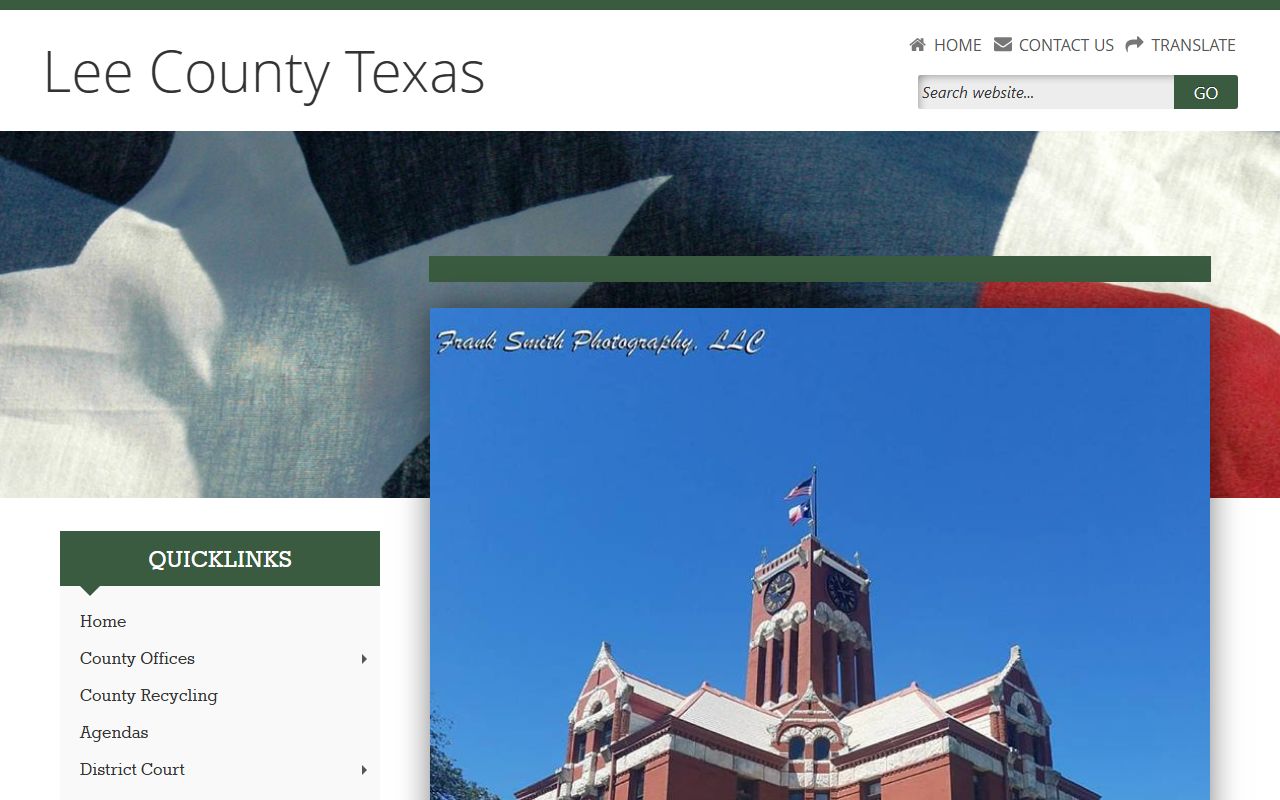
The Lee County Courthouse in Giddings is where divorce records are filed and stored for the 21st Judicial District in Central Texas.
Legal Help in Lee County
Residents of Lee County can find free legal assistance through Lone Star Legal Aid, which covers Central Texas. They handle family law matters including divorce and custody for qualifying low-income individuals. The self-help portal at texaslawhelp.org has guides for handling your own divorce case under Texas law, along with links to legal aid groups in your area.
If you want a private attorney, the State Bar of Texas offers a referral service at (800) 252-9690 or through texasbar.com. Fee waivers are available if you cannot afford to pay court costs. You file a Statement of Inability to Afford Payment of Court Costs, available at txcourts.gov. The court reviews your financial situation and decides if you qualify.
Cities in Lee County
Lee County includes Giddings, Lexington, Dime Box, and a few other small communities. All divorce cases filed within Lee County go through the 21st District Court in Giddings. No city in Lee County has the population needed to qualify for a dedicated page on this site.
Nearby Counties
Lee County is bordered by several Central Texas counties. If you are looking for a divorce record and are unsure which county it was filed in, consider where the parties lived at the time of the divorce.