
San Saba County Divorce Records
San Saba County divorce records are on file at the District Clerk's office in San Saba, Texas. The clerk holds all family law case files for the county, including original petitions, agreed decrees, and final judgments. If you need to search for a divorce case or get a certified copy of a Final Decree of Divorce filed in San Saba County, the District Clerk's office is where you start. You can try the statewide online search portal or visit the courthouse in person during regular business hours. San Saba is a small, rural county in Central Texas, and all divorce cases for residents are filed at the courthouse in town.
San Saba County Overview
San Saba County District Clerk
The District Clerk in San Saba holds all divorce case records for the county. Every document filed in a family law case ends up here. That includes the Original Petition for Divorce, service papers, any agreed terms, and the final court order. Staff can look up cases by name or cause number and make copies on request.
San Saba County is in Central Texas, southeast of Brownwood. The county seat is San Saba, and all district court business is handled at the courthouse there. To file for divorce in San Saba County, at least one spouse must have lived there for 90 days and in Texas for six months per Texas Family Code § 6.301. The 33rd District Court covers family law matters here.
| Office | San Saba County District Clerk |
|---|---|
| Address |
San Saba County Courthouse 500 E. Wallace Street San Saba, TX 76877 |
| Phone | (325) 372-3635 |
| Hours | Monday through Friday, 8:00 AM to 5:00 PM |
| Website | sansabacounty.org |
Searching for Divorce Records in San Saba County
The best online tool for finding San Saba County divorce cases is the statewide re:SearchTX portal from the Texas Office of Court Administration. You can search by party name or cause number. It shows docket history, case status, and party information for district courts across Texas.
Some older records may not appear online. San Saba County is a small rural county, and the District Clerk's office handles records requests by phone or in person. If you cannot find a case in the portal, call the office or visit the courthouse. Bring the full name of at least one party and the approximate year of the case. The clerk can tell you what is in the file and what copies cost.
The Texas DSHS offers a marriage and divorce verification service for events from 1968 forward. This confirms a divorce is on file with the state but does not give you the actual decree or case details. For the complete record, go to the District Clerk.
Certified copies of the Final Decree of Divorce cost more than plain copies. Bring a photo ID when visiting the courthouse. The Texas DSHS maintains a vital statistics database with basic index information about Texas divorces, which can help confirm basic facts before you request full copies.
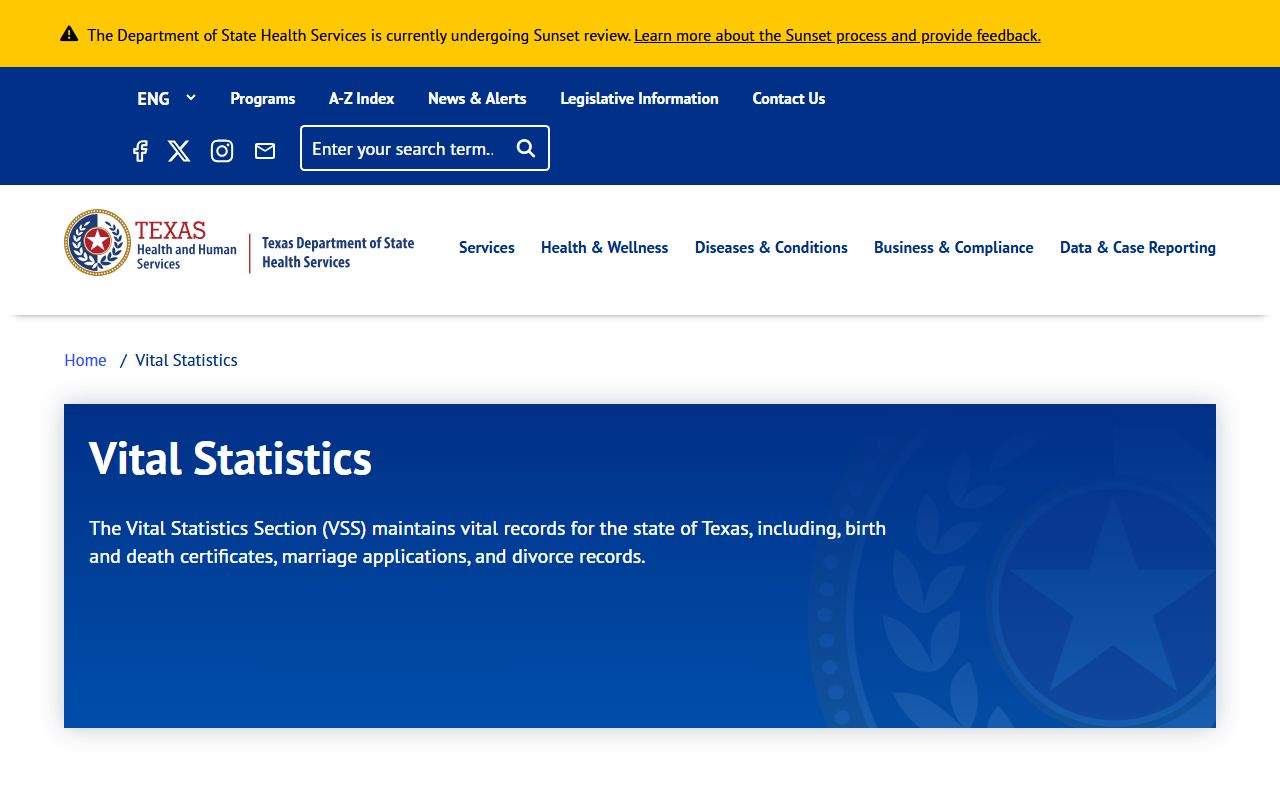
Texas DSHS vital statistics provides a statewide index of divorces from 1968 forward, which can help confirm whether a case was filed before you request the full file from San Saba County.
Divorce Filing Process in San Saba County
Filing for divorce in San Saba County follows Texas law under Texas Family Code Chapter 6. The process starts when one spouse files the Original Petition for Divorce at the District Clerk's office. Each document filed after that becomes part of the permanent public record.
Texas requires a 60-day waiting period from the date the petition is filed under Family Code § 6.702. The judge cannot sign the final decree until the 60 days pass. This applies even to uncontested cases. Exceptions exist in family violence situations.
Most San Saba County divorces use the no-fault ground under Family Code § 6.001, which means the marriage is insupportable due to conflict with no chance of being repaired. No one has to prove fault. Fault grounds like cruelty under § 6.002 and adultery under § 6.003 are available too. Proving fault may affect how the court splits property.
Texas is a community property state under Family Code Chapter 7. Property acquired during the marriage is divided in a just and right way. What each person owned before marriage, plus gifts and inheritances kept separate, stays with that person. All division terms go into the Final Decree on file at the courthouse.
What San Saba County Divorce Records Contain
A divorce case file at the San Saba County District Clerk's office holds all documents from the start of the case to the final order. The Original Petition for Divorce starts the file. It names both parties, states the grounds, and lists what the petitioner is asking for. The other spouse's response, if filed, is also in the record.
The Final Decree of Divorce is the key document. It ends the marriage by court order and spells out all the terms. That includes property and debt division, conservatorship of any children, a possession and visitation schedule, and any support amounts. Final decrees must be kept permanently under Texas Government Code § 51.303.
Other documents in the file may include financial affidavits, service papers, waivers of service, and temporary orders. Most are public record. Some financial source documents or papers involving children may be restricted. Ask the District Clerk what is accessible in a specific case before making the trip to San Saba.
Note: For older records not yet digitized, retrieval may take extra time. Call the District Clerk before visiting to confirm availability.
Legal Help in San Saba County
Residents in San Saba County who need help with a divorce case have several options. Legal aid groups serve Central Texas and can help people who qualify by income. The State Bar also offers a referral line for those who need a private attorney.
Lone Star Legal Aid serves the Central Texas region and may be able to help with family law cases including divorce. Call (800) 733-8394 or check lonestarlegal.org to see if you qualify. For a private attorney, the State Bar of Texas referral line is (800) 252-9690 and their attorney search is at texasbar.com.
Self-help guides are at texaslawhelp.org. Standard divorce forms approved by the Texas Supreme Court are free to download at txcourts.gov. These forms work for most uncontested cases with or without children.
Cities in San Saba County
San Saba County is a small, rural county in Central Texas. All divorce cases for county residents are handled at the District Court in San Saba.
The county seat of San Saba is the main community. The smaller town of Cherokee is also in the county. Neither community meets the population threshold for a dedicated city page. All divorce filings in San Saba County go through the District Clerk in San Saba.
Nearby Counties
These counties are near San Saba County. Confirm where you have lived for the past 90 days to know which county handles your case.