
Wilson County Divorce Records Search
Wilson County divorce records are on file with the District Clerk in Floresville. Anyone who needs to find a divorce case from this county, or get a copy of a Final Decree of Divorce, should contact the District Clerk's office directly. The courthouse is located in Floresville, the county seat. Wilson County is a smaller county southeast of San Antonio, and its court system handles the full range of family law filings. You can request records by visiting in person or by sending a mail request to the clerk.
Wilson County Overview
Wilson County District Clerk
The Wilson County District Clerk is the official record keeper for all divorce cases filed in the county. The office stores case files, handles copy requests, and can search by party name or cause number. If you need a divorce record from Wilson County, start here.
Wilson County sits between San Antonio and Seguin. It is served by the 81st Judicial District Court. The county seat, Floresville, is where the courthouse is located. All filings for divorce cases in Wilson County go to this office, whether the case is contested or agreed.
| Office | Wilson County District Clerk |
|---|---|
| Address |
Wilson County Courthouse 1420 Court Street Floresville, TX 78114 |
| Phone | (830) 393-7308 |
| Hours | Monday through Friday, 8:00 AM to 5:00 PM |
| Website | wilsoncountytx.gov |
The Wilson County website at wilsoncountytx.gov lists county offices and contact information. For divorce records, use the contact details above or visit the courthouse in Floresville during business hours.
The Wilson County government website provides information about county offices and helps residents locate the right department for public records requests.
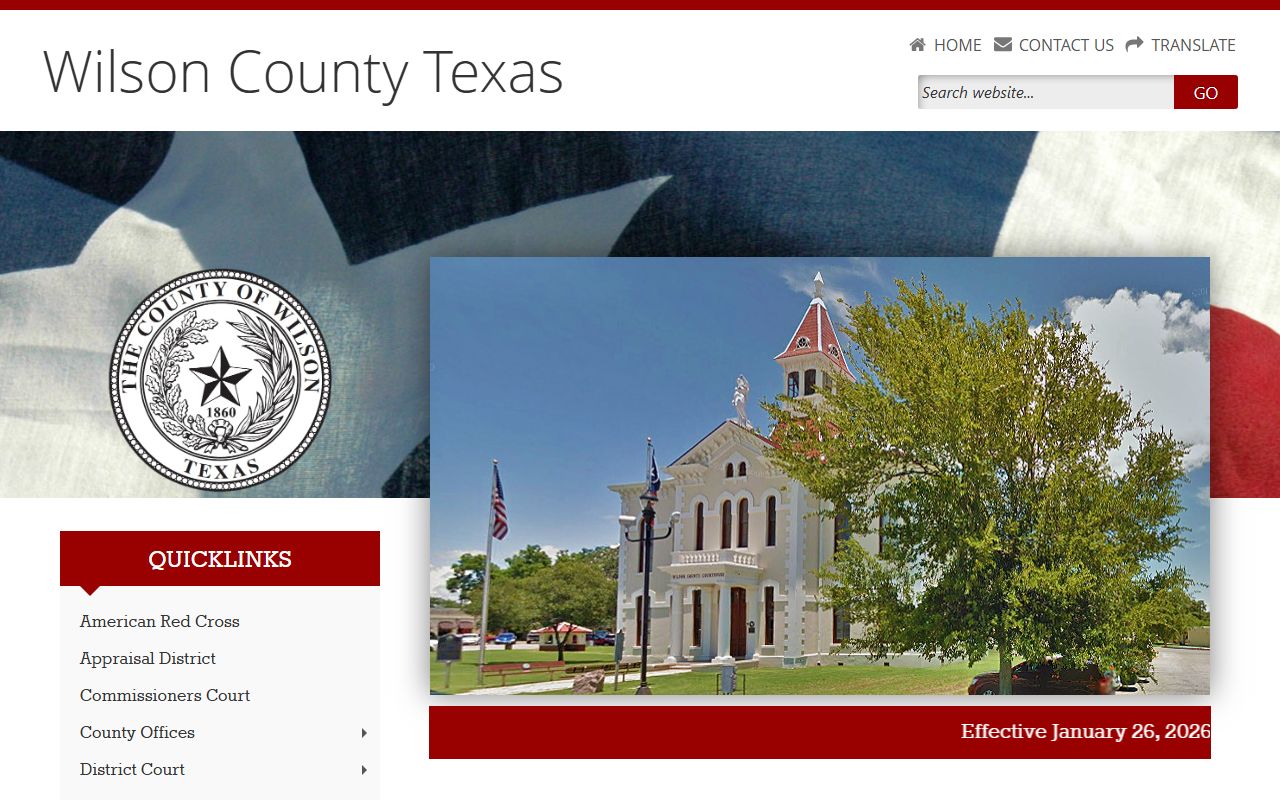
Review the county website to confirm current office contact details and hours before making a trip to the courthouse or sending a mail request.
How to Search Wilson County Divorce Records
Wilson County does not have its own public online case search portal. The best way to find a divorce record here is to contact the District Clerk by phone or visit the courthouse. The statewide re:SearchTX system may have some case data for Wilson County, though coverage of smaller counties can vary.
To search in person, go to the Wilson County Courthouse at 1420 Court Street in Floresville during business hours. Bring a photo ID and whatever information you have about the case: full names of both parties, approximate year of filing, and a cause number if you have one. The clerk will search the records and let you know what is available.
For mail requests, write to the District Clerk at the courthouse address. Include the names of both spouses, the year the divorce was filed, and your mailing address. Enclose a check or money order for the search fee and estimated copy costs. The clerk will send you what they find or contact you with the total if the cost is more than expected.
You can also request a divorce verification letter from the Texas DSHS Vital Statistics Section at dshs.texas.gov/vital-statistics. This confirms that a divorce occurred in Texas but does not include the full decree. It can be useful for legal or insurance purposes when you only need basic confirmation.
Wilson County Divorce Filing Costs
Divorce filing fees in Wilson County follow the state-approved schedule set by the District Clerk. Most petitions cost in the range of $300, though the exact amount may vary based on the type of case. Cases with children involved may have slightly higher fees due to additional required filings.
Copies of existing divorce records cost a per-page fee plus a certification fee for certified copies. Non-certified copies are cheaper. Call the District Clerk at (830) 393-7308 to get current rates before you send payment. The office can also tell you if additional fees apply for older records that require off-site retrieval.
For those who cannot afford to pay, Texas law provides a way to request a fee waiver. Under Texas Rule of Civil Procedure 145, you file a Statement of Inability to Afford Payment of Court Costs. You must show financial need. Free forms are available at the courthouse and at txcourts.gov.
Divorce Filing Process in Wilson County
Wilson County divorce cases follow Texas state law under Texas Family Code Chapter 6. The process begins when the petitioner files an Original Petition for Divorce with the District Clerk. Every document filed from that point becomes part of the public case file.
To file in Wilson County, you must meet residency rules. Texas Family Code § 6.301 requires that at least one spouse have lived in Texas for six months and in Wilson County for 90 days before the filing date. If you recently moved to the county, you may need to wait before you can file.
Most Wilson County divorces use the no-fault ground of insupportability under Texas Family Code § 6.001. This simply means the marriage has broken down without any real hope of repair. Fault grounds are also available, including cruelty (§ 6.002), adultery (§ 6.003), and abandonment (§ 6.005). Fault can sometimes affect how the court divides property.
Texas is a community property state. Under Texas Family Code Chapter 7, the judge divides marital property in a just and right way. Property each person owned before the marriage or received as a gift or inheritance counts as separate property, as long as it was kept apart from marital funds.
60-Day Waiting Period: Texas law under Family Code § 6.702 requires a 60-day waiting period from the date the petition is filed before a divorce can be finalized. Exceptions exist for cases involving family violence.
What Wilson County Divorce Records Contain
A Wilson County divorce file holds all the documents from the case. The Original Petition starts the record. The Waiver of Service or Return of Service shows the other party was notified. Any temporary orders entered during the case are also on file. Settlement agreements, financial affidavits, and parenting plans are all part of the case record.
The Final Decree of Divorce is the most requested document. It is the signed court order that ends the marriage. It names both parties, states the grounds, and sets out all the terms: how property and debts are divided, conservatorship arrangements, possession schedules, child support, and any spousal maintenance. A certified copy of the decree is what most people need for name changes, remarriage, or legal purposes.
Wilson County divorce records are generally public. Anyone can ask for copies of most documents. Some financial records or information about children may have limited access in certain cases. The District Clerk can tell you what is available when you make your request.
Legal Resources for Wilson County
Wilson County residents can find legal help from several organizations in the region. If your income is low, you may qualify for free or low-cost services. These groups cover family law matters including divorce, custody, and support.
Lone Star Legal Aid serves Wilson County and covers family law cases for eligible clients. Call (800) 733-8394 or go to lonestarlegal.org. The Texas RioGrande Legal Aid also serves the South Texas region. For self-help resources, visit texaslawhelp.org for guides in both English and Spanish. Official court forms are free at txcourts.gov.
For attorney referrals, the State Bar of Texas offers a service at (800) 252-9690. You can also search at texasbar.com.
Nearby Counties
These counties are near Wilson County. Divorce cases must be filed in the county where you live. Check your address before deciding where to file.