
Search Brown County Divorce Records
Brown County divorce records are filed with the District Clerk at the courthouse in Brownwood. Anyone looking for a divorce case in Brown County can search online through the statewide portal or visit the courthouse to request copies directly. The District Clerk handles all family law filings and keeps permanent records of every divorce case in the county. Whether you need a basic case lookup or a certified copy of a final decree, the Brown County District Clerk in Brownwood is your source.
Brown County Overview
Brown County District Clerk
The Brown County District Clerk in Brownwood keeps all the divorce records for the county. This office processes new filings, maintains the case index, and responds to records requests from the public. The District Clerk is an elected position, and the office serves as the official keeper of all district court filings, including family law and divorce cases.
Brown County uses a district court to handle divorce and other family law matters. The court hears cases for the county and has jurisdiction over dissolution of marriage, property division, conservatorship, and support. The courthouse is in downtown Brownwood and is accessible during standard business hours. Staff can assist with in-person searches and copy requests.
The Brown County official website at browncountytx.org provides contact details and information about county services, including the District Clerk office. Use this to confirm current hours or look for any online access tools the county may offer.
| Office | Brown County District Clerk |
|---|---|
| Address |
Brown County Courthouse 200 S. Broadway Brownwood, TX 76801 |
| Phone | Contact county office |
| Hours | Monday through Friday, 8:00 AM to 5:00 PM |
| County Website | browncountytx.org |
How to Find Brown County Divorce Records
The re:SearchTX portal is the best online starting point for Brown County divorce cases. It is a free statewide search system maintained by the Texas Office of Court Administration. You can search by party name or cause number and see docket entries, filing dates, and case status. Most cases filed in recent years should appear in this system.
If you need certified copies or are looking for older records, contact the District Clerk directly. The staff in Brownwood can search by name or cause number. Bring your ID if you visit. Certified copies of the Final Decree of Divorce are used for things like name changes, property transfers, and remarriage. The clerk can tell you the current copy fees when you call.
The Texas DSHS divorce verification service provides a confirmation letter for divorces recorded in Texas from 1968 forward. This is not a full copy of the record. It is a basic verification only. For the full court file, go to the Brown County District Clerk. The Texas eFile system can help you track documents if your case is being filed electronically.
The Brown County homepage is shown below and links to county office contacts including the District Clerk:
The Brown County website provides an entry point for finding District Clerk contact information and other county services.
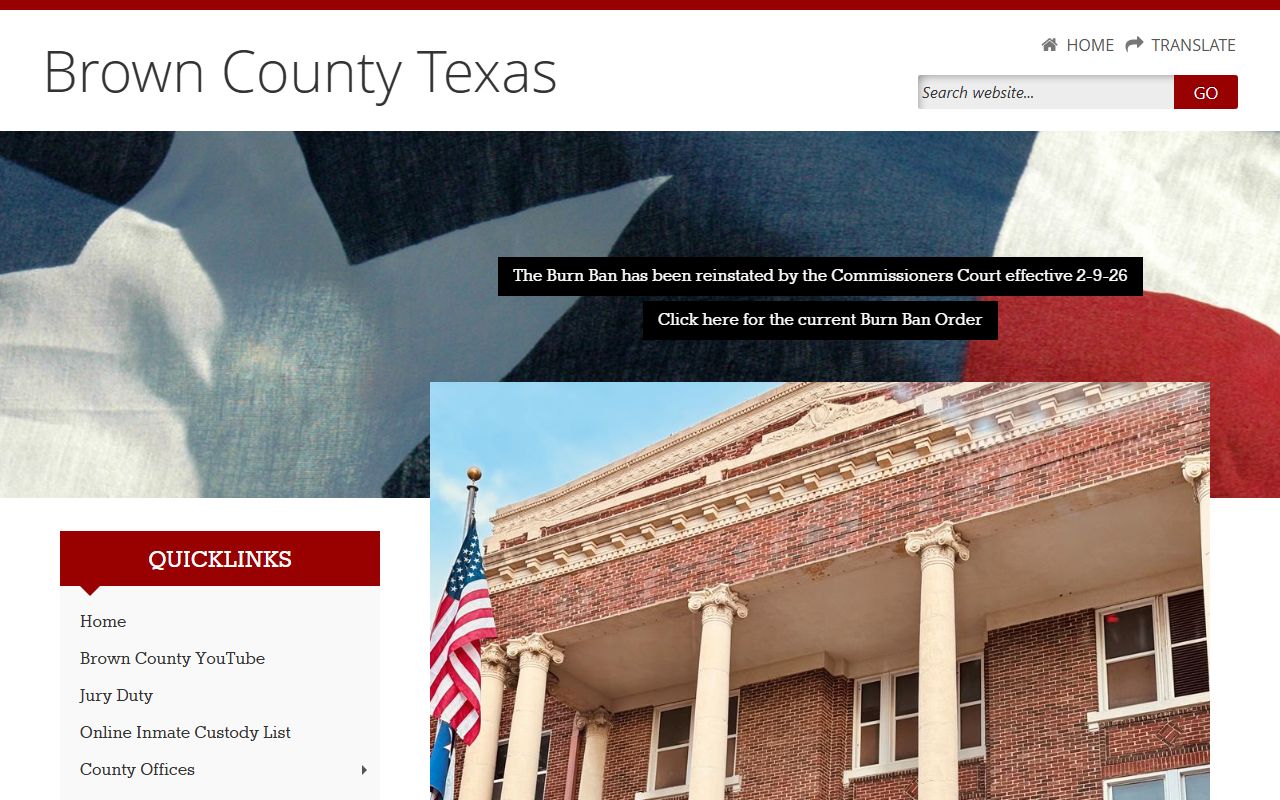
Use the county site to confirm current hours and any additional online search options before visiting the Brownwood courthouse.
Filing Divorce in Brown County
To file in Brown County, one spouse must meet the residency requirement under Texas Family Code Section 6.301: six months in Texas and 90 days in Brown County before filing. Once that is met, you submit an Original Petition for Divorce to the District Clerk and pay the fee. The case is assigned a cause number, and the process begins.
Service on the other spouse comes next. They receive a copy of the petition and a citation. They can file an Answer or sign a Waiver of Service if they agree not to contest. In an uncontested case where both sides agree on all terms, the process can be fairly quick. A contested case may need mediation or a trial in front of the judge.
Texas requires a 60-day waiting period under Texas Family Code Section 6.702. No judge may grant a divorce until 60 days have passed since the petition was filed. For agreed cases in Brown County, the decree is often signed shortly after the 60-day mark if all paperwork is complete. Contested cases can take much longer.
The most common divorce ground in Texas is insupportability under Texas Family Code Section 6.001. This is a no-fault ground that does not require proof of wrongdoing. Fault grounds like cruelty, adultery, or abandonment are also available and can influence how property gets divided.
Community property rules under Family Code Chapter 7 govern property division in Texas divorces. The court divides marital property in a just and right manner. Separate property, meaning what you owned before marriage or received as a gift or inheritance, is not subject to division.
What Is in a Brown County Divorce Record
A Brown County divorce file holds every document submitted during the case. The Original Petition for Divorce starts the file. Other documents include the citation, any answers, motions, temporary orders, financial affidavits, and the Final Decree. The decree is the most important document and the one most people need a certified copy of after the case closes.
The final decree covers property division, any parenting arrangements for children, child support, and spousal maintenance if the court ordered it. It is a binding court order. Certified copies are needed when you need to prove the divorce is final, divide retirement accounts under a Qualified Domestic Relations Order, or transfer real estate titles.
Divorce records in Brown County are public records. Anyone can ask for them. Certain items like sealed financial documents or records involving minors may be restricted. The District Clerk can tell you what is publicly available in a specific case. All records are kept permanently by the county under rules from the Texas State Library and Archives Commission.
Legal Resources in Brown County
If you need help with a divorce case in Brown County and cannot afford an attorney, TexasLawHelp.org is a good starting point. The site has plain-language guides on every step of the Texas divorce process and links to court-approved forms. It covers uncontested and contested cases and is free to use.
Official divorce forms approved by the Texas Supreme Court are available for free at txcourts.gov. These forms are accepted at the Brown County courthouse and all other Texas courts. For a private attorney, contact the State Bar of Texas at (800) 252-9690 or search at texasbar.com. Attorneys in Brownwood and the surrounding area handle family law cases. Many offer a first meeting at a low fee.
The Texas Vital Statistics Section can also issue a verification letter if you just need to confirm a divorce is on record with the state. This is a separate process from getting copies of the actual court file.
Cities in Brown County
The county seat is Brownwood, where the District Clerk and courthouse are located. No cities in Brown County currently meet the population threshold for a dedicated city page on this site. All residents of Brown County file divorce cases at the courthouse in Brownwood.
Nearby Counties
Brown County is in central west Texas. These neighboring counties each have their own District Clerk and courthouse for divorce records and filings.